Home / Latest News / Press releases / The AEB Foundation Awards the Federico Prades Award for Young Economists

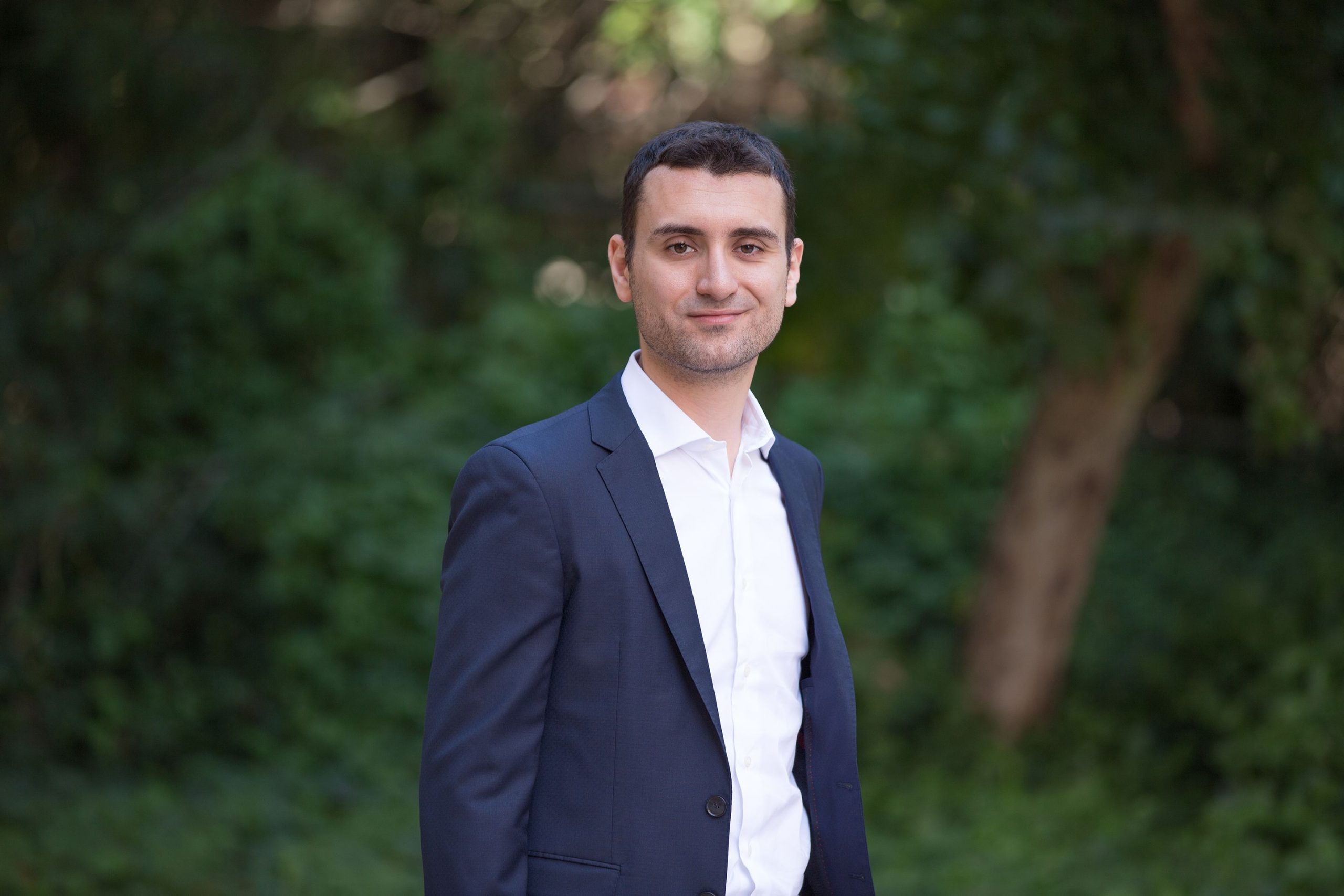
The Federico Prades Award for Young Economists, granted by the AEB Foundation and the Spanish Banking Association in memory of its chief economist for thirty years, has been awarded in its third edition to José Abad for his work on “The Use of Bank Capital Buffers: The Role of Market Expectations.”
Regarding this work, the Award jury highlights the full relevance and topicality of the subject analyzed, given that the Covid-19 crisis has revealed the underutilization of capital buffers, as well as the ongoing debate on the matter among authorities, professionals, and academics related to the sector. The changes that may be introduced as a result of this debate in the composition of capital buffers can also be of great relevance for banking entities.
The award, endowed by the AEB Foundation with 20,000 euros, will be presented in the coming days by the President of the Spanish Banking Association and the AEB Foundation, Alejandra Kindelán, who has expressed her satisfaction at being able to bestow this award, to which she has been linked since its first edition as a jury member, given the affection and admiration she has held for Federico Prades for his innovative and pioneering work in the field of modern economic analysis.
Regarding the awarded work, the President of the AEB considers it “a valuable contribution to the sector, as it analyzes the causes of the scarce use of capital buffers during the economic crisis caused by the pandemic and introduces the component of market expectations into banks’ decision-making process regarding the application of these buffers.” “The work,” she adds, “also presents several suggestions to improve the utilization of capital buffers, some in line with proposals currently being discussed among authorities and representatives of the banking sector.”
In his work, José Abad maintains the thesis that “following the COVID shock, supervisors encouraged banks to use capital buffers to support recovery. However, banks have been reluctant to do so. Whenever the market expects a bank to rebuild its buffers, any reduction will open a capital shortfall that will weigh on its share price. Therefore, a bank will only decide to use its buffers if the value creation from a larger loan portfolio outweighs the costs associated with a capital shortfall.”
Currently, José Abad — born on May 28, 1982 — is a Visiting Scholar in the Monetary and Capital Markets Department (MCM) of the International Monetary Fund (IMF) in Washington D.C.; a visiting professor of banking and finance in the Department of Economics, Finance, and Accounting at ESADE Business School; and an independent external advisor to the board of directors of Grupo Red Eléctrica. He has also served as Chief Economist and Deputy Director of Studies and International Relations at the Official Credit Institute (ICO).
Twenty-two papers were submitted for the award, all of high quality, according to the jury’s assessment. The jury included Oscar Arce, Director General of Economics at the European Central Bank; Alejandra Kindelán, then Director of the Research, Public Policy, and Institutional Relations Department at Banco Santander; Jorge Sicilia, Research Chief Economist at BBVA; Ana Isabel Fernández, Director of CUNEF; Antonio Merino, Director of Studies at Repsol; Fernando Fernández, Professor of Economics at IE Business School; Rafael Repullo, Director of CEMFI; and Juan Carlos Delrieu, Director of Strategy and Sustainability at AEB. The jury was chaired by Gonzalo Solana, Director of the Nebrija Santander Global Chair in Business Internationalization.