Home / Latest News / You may be interested in / Interviews / “There are 300 billion euros of Europeans’ savings outside the EU. We have to invest them here”

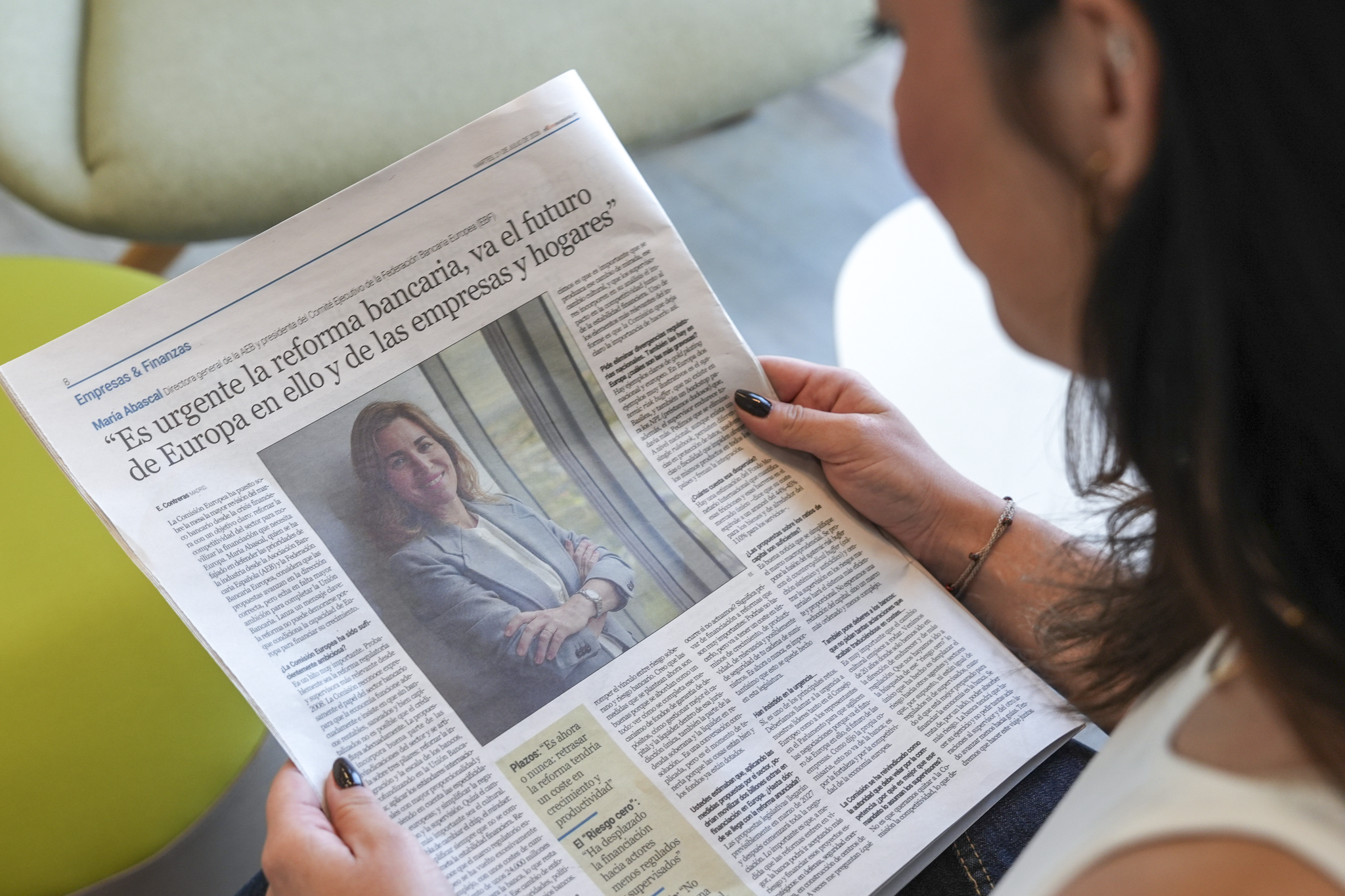
Interview in the newspaper *La Región* of Ourense
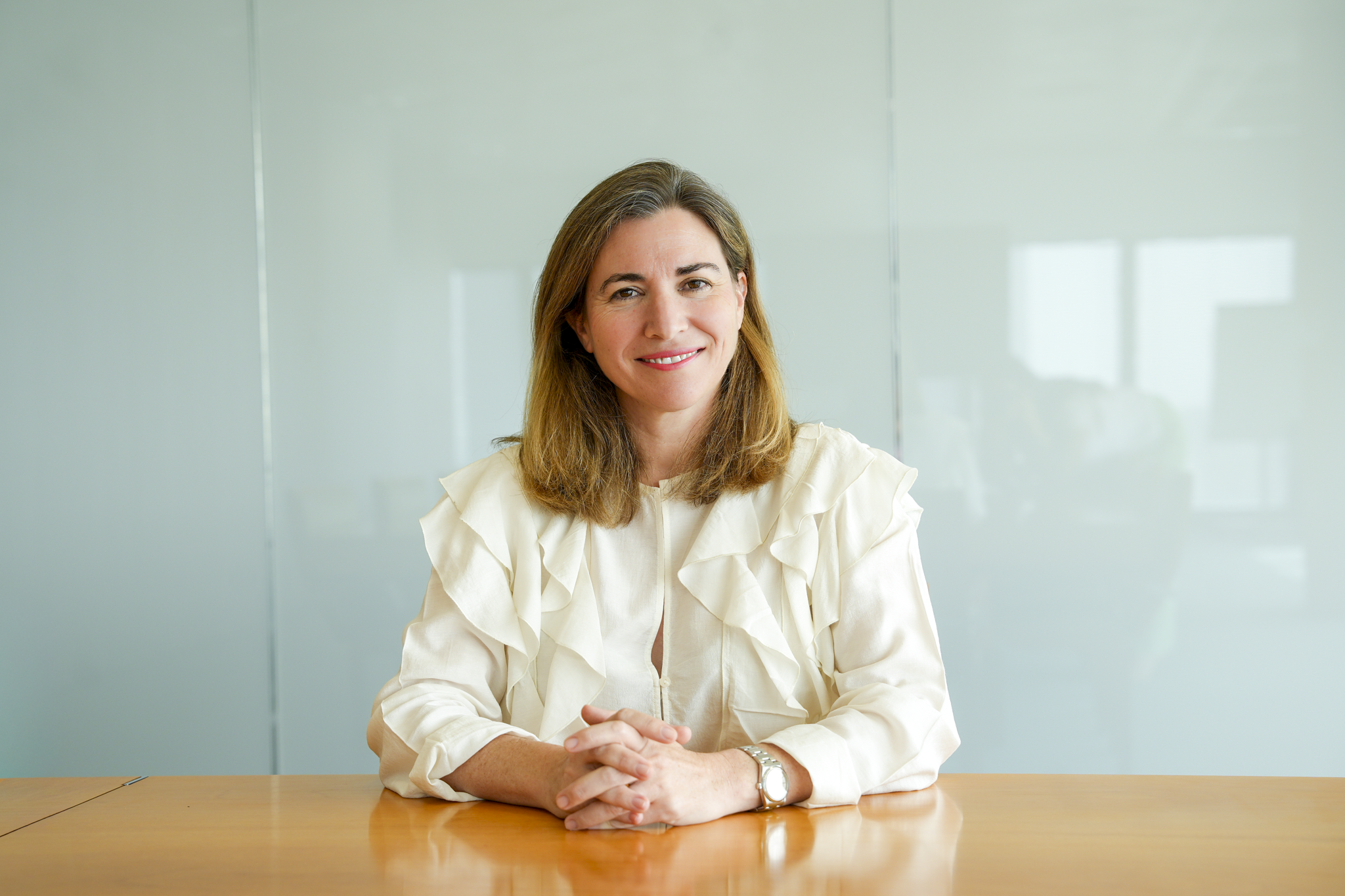
Alejandra Kindelán faces her second term at the helm of the Spanish Banking Association with a message that, far from sticking to the employers’ balance sheet, goes fully into the founding premise of the financial institutions themselves: Europe cannot finance its future if its savings end up working outside the continent. In an interview with La Región Internacional after renewing his post, he analyzes the current scenario, in which “uncertainty has become the new normal” and in which private financing has become the centerpiece of the economic agenda.
With the Euribor far from its highs, but still close to 3%, do you think that the relief for mortgaged families is being sufficient or is there still a part of Spanish society financially stressed?
We live in a world marked by uncertainty. It is true that the war in Iran has led to an increase in the price of oil and that this price volatility has caused inflationary pressures. In the case of the Euribor, it has rebounded to 2.7% and is expected to remain at that level. The European Central Bank has already made it clear that it will wait for more data on the impact of the conflict on inflation before making its next monetary policy decision.
In any case, in recent years, 80% of mortgages have been signed at a fixed rate, so that families already have a forecast of their repayments. Of the entire mortgage portfolio, just over half of the transactions are at variable rates. Furthermore, we are at a time when Spanish banks are granting the cheapest mortgages in the entire euro zone, with an average interest rate on new operations of 2.64% at the end of 2025, compared to 3.59% in the euro zone, and delinquency rates are at historically low levels.
Do Spanish SMEs now have real access to financing on competitive terms or are they still at a disadvantage compared to large companies?
Bank loans are the main source of financing for Spanish companies, especially for SMEs, to which the sector is highly committed. Our small and medium-sized companies are financed at lower interest rates than European SMEs, with an average rate of 3.19% compared to 3.83% in the euro zone.
In this regard, what I would like to emphasize is the importance of capital market development, with the Savings and Investment Union. It is essential to expand the financial ecosystem and direct the savings of Europeans towards European companies, many of which are SMEs. Right now some 300 billion euros of European savings are invested outside the Union, and it is very important to mobilize these savings towards European business projects.
Which sectors do you see as having the greatest capacity to attract credit in 2026, and which are the ones that banks are most cautious about?
In a scenario in which uncertainty has become the new normal, banking takes on even greater relevance as a pillar of stability and growth. The ECB considers that 1.2 trillion euros per year will have to be financed in the coming years for the construction of new infrastructures, innovation, digital transformation, ecological transition and other key areas such as security, defense and artificial intelligence. These are the sectors with the greatest attractiveness and also the greatest needs.
Would you say that Spain is already in a phase of credit normalization or do you still see families and companies postponing decisions due to the cost of money?
We have the cheapest loans in the euro zone and we see that the credit market works and continues to grow. Last year, credit granted by the banks that are members of the AEB grew by 10% to 935,000 million euros outstanding. In the Spanish system as a whole, mortgages increased by 22% and consumer credit operations by a further 21%. In the case of companies, growth was 16% for loans exceeding one million euros and 4% for the rest. And this dynamism has continued in the first months of 2026. Demand remains strong and the sector is able to meet it thanks to good management, which is reflected in a solid position in terms of profitability, capital and liquidity.
The war in the Persian Gulf has reminded us of the extent to which energy, inflation and financing are deeply connected. Is European banking prepared to finance companies amid the current disruption of costs, supply chains and investment decisions?
Undoubtedly, we are living in turbulent times. We are facing changes of great magnitude which, moreover, are taking place almost without allowing us to take a breath to assimilate them. But the banking system is prepared to face this and other shocks that may come our way. We are a solid, resilient system, and this is reflected in figures such as the solvency ratio, which exceeds 13%, or a profitability of 15%, which is our first line of defense and which is already above the cost of capital and well above the European average.
The sector is today, above all, a pillar of stability: we have the strength to channel liquidity, manage risks and avoid major disruptions in the functioning of the economy in times of stress. It is also a driver of growth: the financing provided by banks allows companies and families to invest. And thirdly, the banking system is a buffer, capable of absorbing a succession of shocks. In recent years alone we have faced a pandemic, the effects of the war in Ukraine and an energy crisis, and we can say that, with our own strength and with public-private collaboration, we have alleviated the impact on families and companies.
You have argued that the tax on banks in Spain reduces lending capacity. What does this mean, concretely, for families, SMEs and growth?
The effect is not an immediate one, but may have medium-term consequences. In a situation where trillion-dollar investments have to be financed in many sectors, we cannot reduce the capacity to provide credit…
Furthermore, this is a tax that discriminates and is a competitive disadvantage, since we are the only European country with a tax of this type. I would like to stress that banking is one of the sectors that contributes most to the welfare state in Spain, allocating a third of its profits to the payment of taxes. Last year alone, the banks of the AEB paid 12,000 million euros in bank and corporate taxes, in addition to many others, such as stamp duty and the tax on deposits. Another third of the profit is destined to reserves, to be able to continue lending money to families and companies, and the remaining third is distributed in dividends among the shareholders. Of these, 5.3 million are retail shareholders, who supplement their income with this dividend.
Are you concerned that Spain will be left in a worse competitive position compared to other European markets if it maintains singular pressure on its banking sector? Or, put another way, is Spain weakening the competitiveness of its banking sector at a key moment for Europe?
Spanish banks are competitive and efficient. However, if we want the sector to continue to be a pillar of growth, we must focus on greater competitiveness. And here it is important to curb the regulatory and supervisory avalanche coming from Europe, which on many occasions produces overlaps, also with the requirements of the supervisor, and requires simplification. In this regard, the AEB has proposed five measures in the recent public consultation on competitiveness promoted by the EU, which are based on two basic pillars: simplification and market integration.
What are they?
We have asked to broaden the focus so that supervisors and regulators have a secondary objective, beyond that of financial stability, centered on growth and competitiveness. We need a coordination mechanism between authorities that allows for greater predictability on regulatory and supervisory requirements, as well as simplification by reducing the number of capital buffers and avoiding overlaps. Another priority is to improve regulation; for example, with more regulations versus directives and a measurement of the impact of each measure, both before and after implementation.
Finally, it is vital to promote the integration of the single market by completing the banking union with a single European deposit guarantee fund. This mechanism would provide uniform protection for citizens and definitively break the link between banking risk and sovereign risk. In other words, banks should be valued on the basis of their strength and solvency, not their nationality. At the same time, progress must be made on the Savings and Investment Union.
What do you think the regulator is not yet seeing about the risks ahead?
We cannot face a new era with the rules of the past. Rules that have worked and have allowed the sector to gain resilience after the great financial crisis, but now is a different time. It is time to grow. Europe cannot afford not to do so if we want to maintain our way of life, with economic progress and social protection. I sincerely believe that it is time to take courageous political decisions, such as those I mentioned, in order to have a stable and predictable regulatory framework.
Europe is increasingly talking about strategic autonomy – and you have also spoken of the need to reinforce European sovereignty in payments – but it continues to depend on external infrastructures in payments, capital and financial technology. Isn’t this a contradiction?
Europe is not starting from scratch in competitive and secure payment solutions thanks to the developments of the private sector, widely accepted by citizens, as demonstrated by the enormous success of Bizum in Spain, which already has more than 31 million users. The challenge here is market fragmentation, which is why the European payment interoperability project is emerging, of which ‘our’ Bizum is the driving force. The idea is to connect the solutions already operating in different countries. It’s not about creating new infrastructures from scratch, but leveraging existing ones to create a truly pan-European platform that will allow us to reduce dependence on other competitors, especially those in the United States.
By the end of the year, this payment interoperability is expected to connect 130 million users in 13 European countries, around 72% of the population. And in 2027 it will be possible to pay in e-commerce and physical points of sale in these markets using Bizum, which will already implement the solution to pay in Spanish businesses this May.
What would have to happen for Europe to stop lagging behind the United States and Asia in financial technology? How important is it at a time of geopolitical upheaval like the present?
Europe has one of the most efficient and secure payment systems in the world. The question now is to adapt to a technological wave that is already here, and that is transforming not only payments, but also financial markets and their infrastructure, a challenge shared by all jurisdictions.
In this context, Europe has opted for a strategy that seeks to combine innovation with stability and confidence in the euro as a currency. Initiatives such as MiCA, the world’s first comprehensive regulatory framework for cryptoassets, and other Eurosystem work go in that direction: enabling new use cases in ecosystems based on blockchain technology – for example, in securities markets, international payments or asset settlement – securely and under clear rules. And that is what explains the limited role of stablecoins in Europe. In an environment with a stable currency and fast and widespread payment systems, their day-to-day use remains limited. Where they do have more weight is in the crypto ecosystem – especially in trading and decentralized finance – and in economies with more fragile currencies. This is not the case in Europe.
Throughout this process, a key element is the constant improvement of European private payment solutions and their interoperability. Solutions such as Bizum, in coordination with other European solutions, are moving forward to better serve citizens and merchants, facilitating immediate, simple and reliable payments, and connecting with each other to gain European scale. This interoperability is not only technological efficiency: it reinforces strategic autonomy, by relying on its own competitive infrastructures managed from Europe.
Interview by Irene Viña