Home / Latest News / You may be interested in / Interviews / María Abascal: “Pan-European consolidation is the litmus test for the banking union”
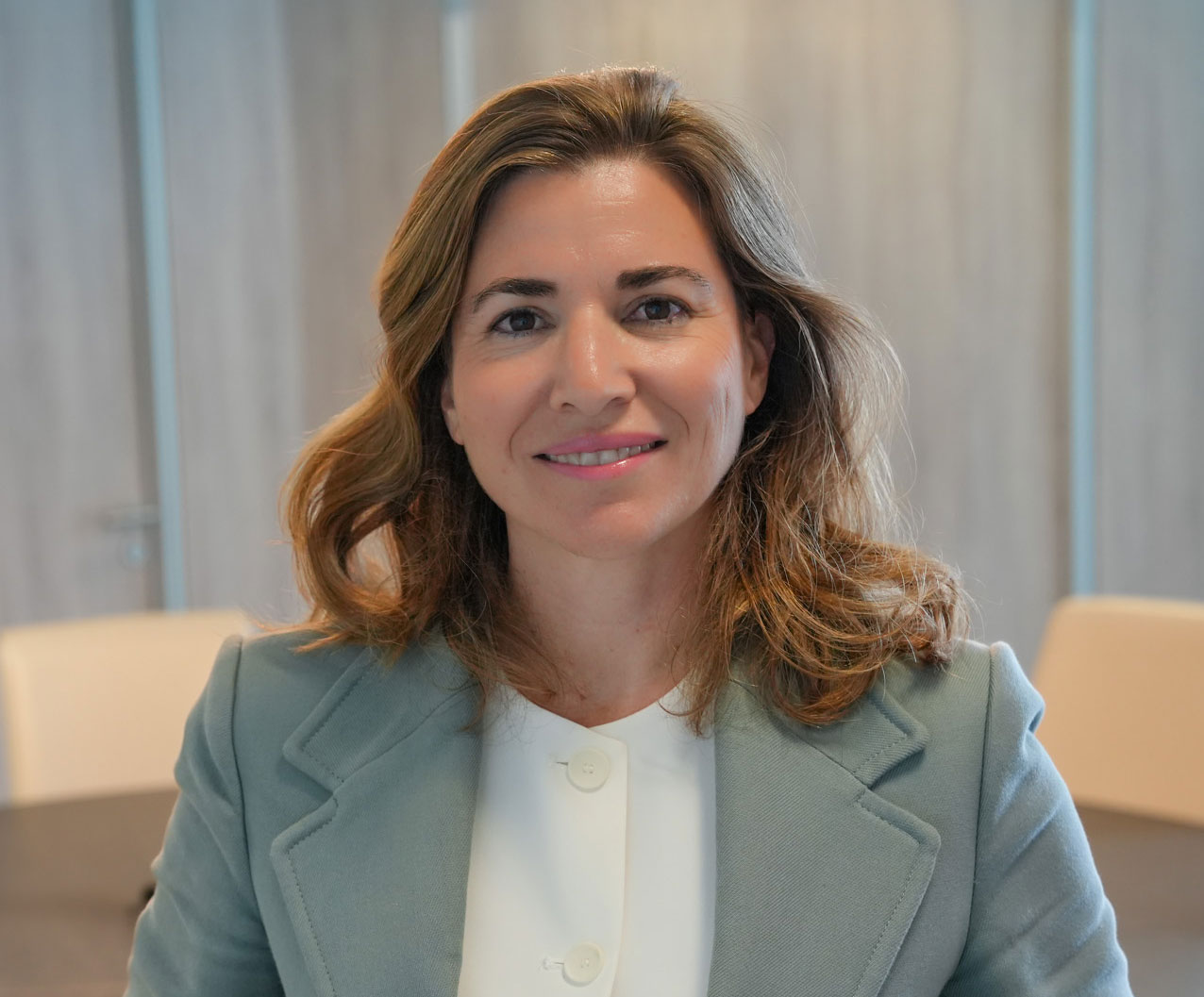
Spanish banking is going through a period of strength that, in María Abascal’s view, should be read in a European context. The Director General of the Spanish Banking Association (AEB) maintains that the sector is solidly positioned to face the economic and geopolitical cycle, and also to deal with the new context of greater integration across the continent. “Pan-European consolidation is the litmus test for the banking union,” she says. However, for it to progress, she considers it essential to move forward on several issues: “We need to complete the common architecture with a European deposit guarantee fund, harmonise national frameworks, and enable more integrated management of capital and liquidity.” Another barrier she identifies in the single banking market is “divergence in national regulation between countries. Differences persist in areas such as insolvency law or consumer protection,” she notes. Overcoming them will be decisive for cross-border integration to stop being an objective and become a reality.
Abascal describes the sector’s current situation as “very attractive”: solid results, robust financial metrics, capital and liquidity levels comfortably above regulatory requirements, non-performing loans at historic lows, and an efficiency ratio that reflects “the good management behind it.”
Structural challenges the sector faces
On this basis, Spanish banking now faces structural challenges that can strengthen its role in Europe. The first is geopolitical uncertainty. “We are entering a new international economic order, and Spanish banking is very well prepared because it is used to operating in volatile environments,” she says. Risk management and governance, she stresses, are a structural part of institutions’ models and processes.
The second major challenge is technological disruption. The sector has led Europe’s digital transformation for years, but the operating framework has changed. “Banks no longer compete only with banks, but with other players, such as banking fintechs,” she warns. In this environment, institutions continue to step up their investment in digitalisation: “We are at a time of growing commitment to technology to prepare for the future: not only by adopting artificial intelligence, but also by strengthening security, cyber resilience and operational resilience.” A process that, in her view, “will lead to improved efficiency.”
In a European context
Beyond the structural challenges, the shift in monetary policy in recent years has shaped the evolution of bank profitability. Between 2022 and 2023, interest rate rises boosted margins; since 2024, with the start of cuts, the scenario has changed again. Nevertheless, Abascal is confident that “banks have prepared for this situation by adjusting their balance-sheet mix, diversifying their sources of income and controlling costs to ensure the sustainability of that profitability.”
From a European perspective, she stresses that the sector is today “more relevant than ever.” The continent needs to strengthen its competitiveness in strategic areas that require major investment. “Banks finance 75% of those needs, but we also need to move towards a broader ecosystem that makes it possible to channel a greater share of savings into capital markets.”
In this environment, private markets play a complementary role. “The sector is the main financier of the European economy, but we have new needs,” she notes. In her view, it is about adding capabilities: “Private markets complement the role of banks in a context of growing financing needs. We need an ecosystem in which all players contribute.” The goal is “to strengthen the ecosystem so that everyone can grow.”
The SIU and channelling European savings
In this logic of strengthening a single financial market, the proposal for the Savings and Investment Union (SIU) fits in. “Banks are fully in favour,” Abascal assures. As the association’s spokesperson, she explains that they see the project “as a natural evolution of the capital markets union.”
Her diagnosis is clear: “Europe does not have a savings deficit, but rather a problem of channelling that capital into long-term investments, preferably within Europe.” In that process, banks play a dual role: as the main financier of SMEs and as a facilitator of access to capital markets, both through placements and securitisations and, especially, through the distribution of investment funds and pension plans. “We must not forget that the main distribution channel for collective investment vehicles in Spain is banking, which explains the very close and positive relationship that exists with asset managers.”
That said, for the SIU to succeed, Abascal introduces a decisive condition: the tax incentive. “It is essential to have that incentive. Without it, it is unlikely to take off,” she warns. What has happened in recent years with pension plans is, in her view, a clear example: “The reduction in tax incentives has had a direct impact on assets under management because investors are very sensitive to these stimuli.” This support mechanism must be accompanied by financial education: “A well-informed investor, who understands the risks and opportunities, is in a better position to make long-term investment decisions.”
She acknowledges that the profile of Spanish savers remains conservative, which reinforces the need for education at a time when Europe needs to mobilise around €1.2 trillion a year in areas such as digitalisation, defence, industrialisation or the energy transition. “Something that cannot be addressed with public funds alone,” she stresses. The key is “to channel existing savings more efficiently.”
More capital, less credit
On the regulatory front, María Abascal stresses that there is broad consensus on the need to simplify as a way to strengthen competitiveness and growth. However, she calls for greater clarity, especially regarding capital. “Supervisors’ discretionary decisions have significantly increased requirements, which ultimately penalises lending,” she warns. She also expresses concern about the debate around AT1s, or CoCos, “instruments recognised in Basel and valued by investors.”
The banking sector’s proposal for the savings and investment account
Regarding the design of the Savings and Investment Account, the sector advocates a broad and flexible approach. “It should include different instruments,” says María Abascal, allowing “investment funds, pension plans or ETFs to coexist within a simple scheme that is easy for the customer to use.” She considers it reasonable to set a five-year holding period, required at the account level rather than by instrument, and argues for a clear European component. “If a tax benefit is to be granted, it makes sense to steer investment towards Europe’s major challenge, which is to generate more investment within the Union.” In that sense, she proposes that “at least 70% of the portfolio should have a European component,” avoiding sector-based criteria. She also points to operational challenges: if multiple accounts are allowed, “the obligations to monitor the tax benefit could no longer fall solely on banks and asset managers,” which will need to be taken into account in the final design.
Interview conducted by Arantxa Rubio