Home / Latest News / You may be interested in / Interviews / “The bank tax will affect credit, and if approved, we will appeal it.”
The banking sector in Spain is currently addressing two key issues with the Government. On the one hand, the launch of 5 billion euros in credit, backed by the ICO, for the recovery from damages caused by the floods in Valencia.
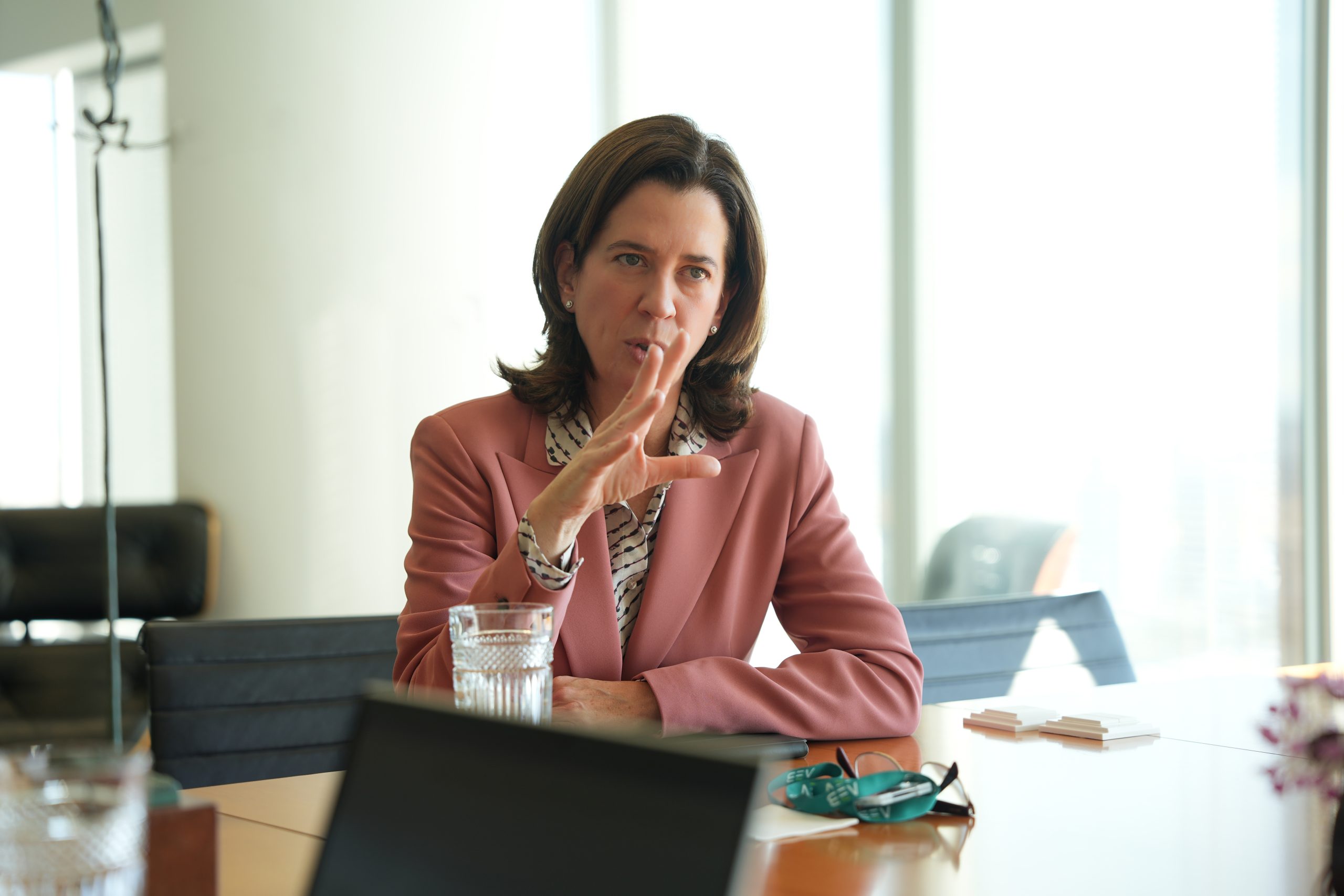
And on the other hand, the tax on financial institutions that the Executive wants to make permanent, which will be debated tomorrow in the Congress of Deputies. The head of the banking employers’ association in Spain, Alejandra Kindelán, sets priorities: “To enable credit as quickly as possible” in collaboration with the Government to assist Valencia, but also reproaches the central Executive for “not having maintained a normal dialogue” on an issue as significant as the tax. Kindelán also warns that making it permanent “will affect credit” and criticizes a “very unfair targeting of the sector.” Regarding Trump’s return to the White House, she warns that “it changes everything in global trade and macroeconomics.”
The tragedy of the Valencia floods has affected 30 billion euros in loans, according to the Bank of Spain.
It is an absolute priority for the sector, in an act of solidarity with the victims and affected individuals. We are committed to channeling aid and finding solutions. The first measure has been a three-month moratorium on loan principal and interest, which can be extended up to nine months for principal. This is something that families and businesses can already apply for, and it is important to remember that.
The Government has launched a 5 billion euro guarantee line with the ICO. When will these recovery loans be activated?
Some aspects are being finalized in a regulation, and efforts are being made to do so as quickly as possible. It will be in effect in the coming days.
This week you met with the King to discuss these measures. What impression did you get? Do you believe the management of the catastrophe has been contaminated by partisan politics?
At the meeting, I perceived great sensitivity to the magnitude of the tragedy. Thousands of people have lost their homes, 54,000 businesses are affected, 20,000 hectares of crops, 90,000 vehicles… I believe what is important is a message of unity and collaboration between the public and private sectors with all levels of administration, and to work on a rapid response.
Banks reacted to Trump’s victory with stock market declines. What is the exposure of Spanish entities?
His arrival changes everything. It affects global trade due to his willingness to impose tariffs. It changes macroeconomics and geopolitics.
Two weeks ago, at the IMF meeting in Washington, one of the conclusions was that the market had not yet incorporated all geopolitical risks. And, after the elections, we saw the European stock market fall, especially for companies with an international presence.
What should the response be?
We need to get our act together in Europe. We must implement the roadmap from the Draghi report: more integration, more strategic autonomy, more growth, and more competition. And for that, we need market unity and more balanced regulation.
Does the Government’s intention to make the bank tax permanent align with that direction?
Absolutely not. It is a tax that was introduced when interest rates were rising; that was the justification. Now they are falling, and there is an enormous need for investment. For this, it is fundamental that the banking sector is strong. The tax, as it is designed, is a barrier to growth. Credit will be affected, no matter what. The sector’s calculations estimate an impact of about 50 billion euros.
In light of the banks’ profits, they do seem strong. Don’t you think it’s hard to understand the opposition to the tax?
We surely need to explain the importance of profitability more and better. It is essential for the banking sector. The results are high because Spain is home to very large, international banks, and 60% of those results come from those countries. One-third of the profit goes to tax payments, 14 billion euros; another third is to pay shareholders, which is necessary for the sector’s sustainability; and the other third is to accumulate capital to continue lending.
Fedea said the tax is a “fine” on a sector that is “unpopular” with a part of the Government. Do you feel penalized by the Executive?
I believe it is a very clear and very unfair targeting of a sector whose purpose is to support the growth and progress of families and businesses.
What does the Government tell you?
We have a very fluid relationship on many issues, however, on this matter, we have not received information. There have been no usual consultation processes. We have expressed our disappointment.
And what about the political parties that have to vote on it?
That they think big and seek medium-term objectives. This is very short-sighted; it generates revenue by impacting the capacity to grow and compete.
If it is approved, will you appeal it?
Yes, of course. This tax, as drafted, has the same deficiencies as the previous levy.
Do you believe there is pressure from the Government to prolong the Competition decision on BBVA’s takeover bid for Sabadell?
This is an issue I should not discuss; they are two banks associated with the AEB.
The European Central Bank insists on limiting executive chairmanships in entities, which are the majority in Spain.
We have submitted the appropriate arguments, but within the possibilities for governing an entity, no one has yet guaranteed that one system is better than another.
What is needed to increase the financing capacity that Draghi demands for Europe?
Three things: completing the banking union, creating a single European deposit guarantee fund, and establishing a balanced regulatory framework.
Reduce regulation?
It’s not about less, it’s about reducing complexity and ensuring that supervision does not go beyond regulation. After the 2008 crisis, the systems have worked, banks have withstood a pandemic, two wars on Europe’s doorstep, and they cover 75% of companies’ financing needs.
Interview conducted by Lucas Irigoyen