Home / Latest News / You may be interested in / Articles / A World Without Cash
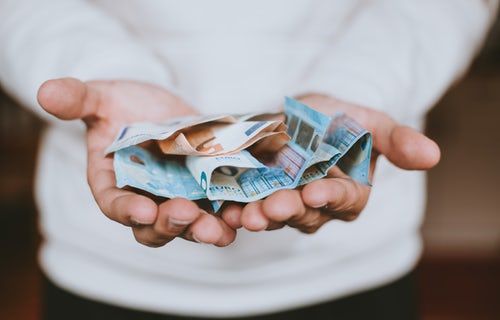
No one should be alarmed; the disappearance of cash is not imminent, as if it were an endangered species. At least in the banking sector, when we speak of “a world without cash,” we refer to a world in which citizens can, if they wish, go without “money (cash)” in their pockets.
This should not be understood as a punishment; it is not about returning to bartering or promoting an economy of absolute austerity, but quite the opposite. It should be seen as a sign of the new times. We now know that money is not only the bills and coins we carry in our pockets, but any abstract value or object that serves as a medium of exchange or value for a group, community, or society and that reflects a system of equivalence between goods and services. With this, and taking advantage of the momentum of digitalization, the circumstances exist for us to begin thinking about a world without cash, for those who want it.
But for that world, ideal for some, to function, it is necessary to guarantee the acceptance of payment methods alternative to cash, whatever they may be: transfers, cards, or payments via mobile device, etc. Otherwise, one would be obliged to carry cash, even if only “just in case” such rejection occurs. And once one carries cash, as it is a habit acquired over time, one will reach for one’s pocket, as a reflex action, to pay with it. In this way, habits are perpetuated over time and it is difficult to break the cycle. Because, let no one be deceived, paying with cash is very simple, especially for those of us who are accustomed to it. The resistance to change among humans is well known; except for a few who are very inclined to change and a few others out of rebellion, the vast majority of people only embrace change when it brings some additional advantage—what we will call “convenience.”
In any case, for money—understood in the broad sense as a medium of exchange or payment generally accepted—to fulfill its function, it must be easy to transport, durable, divisible, and socially accepted. And it must be remembered that in every payment at least two parties are involved: “the payer” and “the beneficiary,” so for one or another payment method to be used, both must agree. That is, the payment method to be used must be convenient for both parties.
Historically, the use of money has been conditioned by social, technological, and political factors, among others. In the future, it will be convenience that determines the inertia in the evolution of certain types of payment, so it may be useful to assess what each contributes from this point of view.
It has become clear that one of the factors conditioning the chosen alternative is the convenience or advantages that some payment methods offer over others, but there is another substantial factor: that the beneficiary accepts that form of payment. On this last point, cash has the lead, as it is mandatory to accept it as a means of payment, although certain limitations exist.
For the payer, the advantages of using electronic or digital payment methods may seem obvious. Although they may not be as evident for the beneficiary, the advantages of using one or another payment method are common to both and can be summarized in that they are freed from dependence on cash, with all that entails.
Let us think about the daily routine of any citizen and the instances in which they must make payments: if they pay in cash, they require a prior allocation, which requires having access points to cash; otherwise, it could lead to a shortage and hinder access to everyday goods or services. This is equally or more important in those places most affected by de-banking. For the latter, knowing that electronic or digital payment methods have universal acceptance allows them to have the confidence of being able to access the goods and services they need in their daily lives. For beneficiaries, accepting payment methods other than cash can, in turn, result in increased sales.
The “security” factor is particularly relevant, and only those who have suffered a robbery, whether consumers or merchants, know the cost of carrying or storing cash. Additionally, the payer usually prefers payment methods other than cash in order to reliably prove that the debt has been settled.
Among the less obvious advantages, loyalty programs associated with certain payment methods can also be identified, both for users and beneficiaries.
But in the digital era, the element that will be most relevant in reconsidering the convenience of moving toward a world without cash, especially from the point of view of acceptance by beneficiaries, will be, of course, the value of data. The added advantages that encourage overcoming the natural resistance to change will arise from the possibilities of managing the information extracted from data derived from electronic payments and from what innovation based on these may bring in the future.
Regardless of individual benefits, there is a global effect derived from the increase in electronic payment methods in consumption, perhaps because more is purchased with them, because digital payments are increasingly invisible, because of the lower contribution (which can be made involuntarily when paying in cash) to the underground economy… the fact is that it has a positive impact on economic growth.
In the context of digital transformation, in which Spain aspires to occupy a leading position, it is necessary that users of payment services, and in particular consumers, have the guarantee that, if they so wish, they will be able to make all their purchases without having to carry coins and bills with them.
Guaranteeing the acceptance of payment methods other than cash is therefore essential to enhance the digital experience of citizens, including in their decisions to acquire goods or services, and to leverage the technological impact and promote innovation in all sectors.
The challenge is not to fight against cash, but to allow citizens to individually choose whether or not to be citizens of a world without cash.
Pilar Clavería, Advisor on Payments, Operations, and Procedures