Home / Latest News / You may be interested in / AEB Informs / “Effective equality is not possible without financial independence”
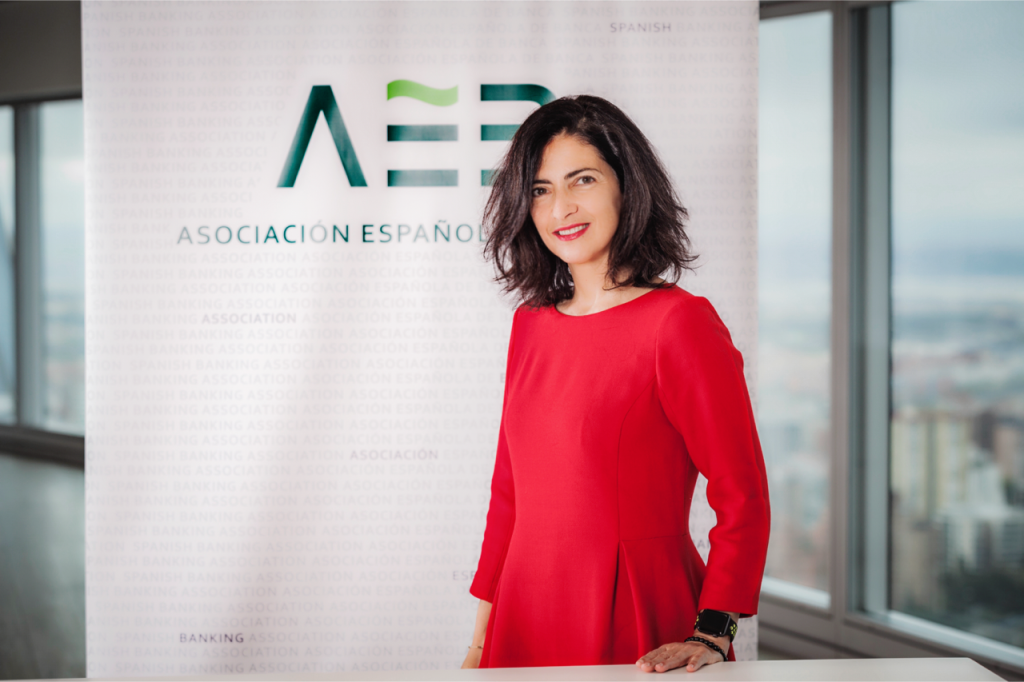
Interview with our Head of CSR, Beatriz Morilla, on the occasion of International Women’s Day on the Soziable website.
Do you believe the gender pay gap persists across all sectors?
The gender pay gap exists, although with the new Non-Financial Information Law it will be more visible and we will have new data to understand how large that gap is and where more work is needed. A study carried out by the technicians of the Ministry of Finance (Gestha) indicates that the gender pay gap for women in Spain reaches €4,745; that is, taking their salary as a reference, women earn 29.1% less than men. There are differences by sector, but this gap occurs in all of them, including the public sector, so it is essential to continue giving visibility to this issue, which is clearly a sign that diversity remains a challenge.
Are companies becoming more aware of the need to take action to end this form of discrimination?
One of the most recent changes is that large companies no longer speak only about diversity and inclusion, but also about equality. They know that making progress on these three pillars is not only a matter of justice, but also of business, because companies that excel in these areas are more innovative, attract and retain talent more effectively, and achieve better financial results.
“Although there are differences, the gender pay gap occurs in all sectors, including the public sector”
As regards normalising women’s access to leadership and decision-making positions, do you believe progress is being made in Spanish society? What more could be done to equalise their promotion opportunities compared with men’s?
The main objective is for there to be more and more women in management positions and decision-making roles, and not simply to meet a quota or to showcase activism. To achieve that normalisation, mechanisms of various kinds must be used, including regulation. In recent years, rules have been approved aimed at increasing women’s inclusion and equality in companies, but their effects are proving slower than expected and, moreover, they remain limited to the sphere of large companies.
In addition to regulation, would it be necessary to continue fostering a change in mindset?
These measures must be complemented with others, and above all action must be taken at an early age: promoting equality education in schools and at home, facilitating work-life balance and equal rights in childcare, or promoting better training for women within the company. Much remains to be done, and it must be done soon so that no more generations are lost.
It is a reality that when they enter the stage of motherhood, many women see their career prospects reduced or leave the labour market altogether. How can this situation be addressed so that this loss of opportunities for women does not occur?
The gender pay gap between men and women is not only a matter of salary thresholds; it widens as age increases. In fact, the differences become more pronounced between the ages of 26 and 45, when many women decide to become mothers and care for their children. Likewise, the technicians attribute the gap between the ages of 46 and 65 to caring for older relatives; and the gap beyond 65 to caring for grandchildren. It cannot be expected that women work as if they had no children or family members to care for, and raise their children or care for their family as if they did not work. That is not possible. It is necessary to make it easier for family responsibilities to be shared, to establish working hours that support a life outside work, and to have companies that recognise and value that life.
“In developing economies, women are 20% less likely to have an account at a financial institution”
One of the targets derived from the UN’s SDG 5 (Gender Equality) proposes reforms that promote women’s access to financial services worldwide. What is the situation for women in terms of access to financial services?
According to the World Bank’s Global Findex database, more than 2 billion adults worldwide do not have an account at a financial institution. In developing countries, women in particular are excluded from the formal financial system. The World Bank has repeatedly warned that women in developing economies are 20% less likely than men to have an account at a financial institution. This is serious because effective equality is not possible without financial independence. And we are not talking only about having a safe place to save money, but also about obtaining credit and insurance that allow them to have better control over their lives and the lives of their families.
Access to banking services must be accompanied by financial education, which is precisely AEB’s top priority…
Knowing how to manage your money is an essential life skill, but it is even more important for women because they typically have fewer financial resources (they earn less, many do not work, they have interrupted careers due to family caregiving, etc.) and, on average, live longer than men. Our banks are committed to promoting women’s financial inclusion, especially in countries where the figures are worrying, and in rural areas where the situation is even worse. In addition, they accompany that access with specific training to ensure that when women access financial products and services, they do so with the skills needed to make the right decisions.
Beatriz Morilla, Head of CSR at the Spanish Banking Association