Home / Latest News / Press releases / The banking sector promotes public-private collaboration for the prevention of money laundering
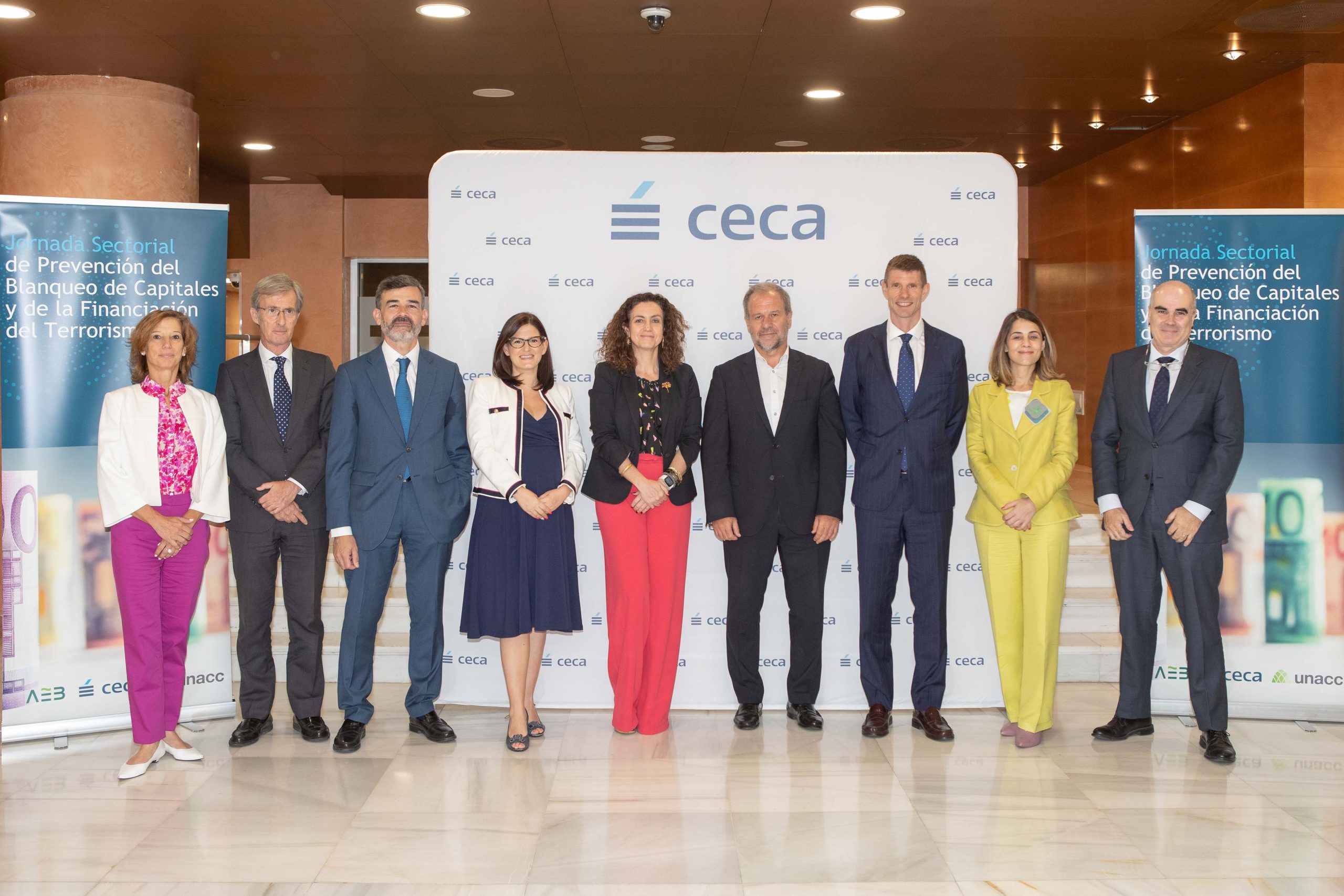
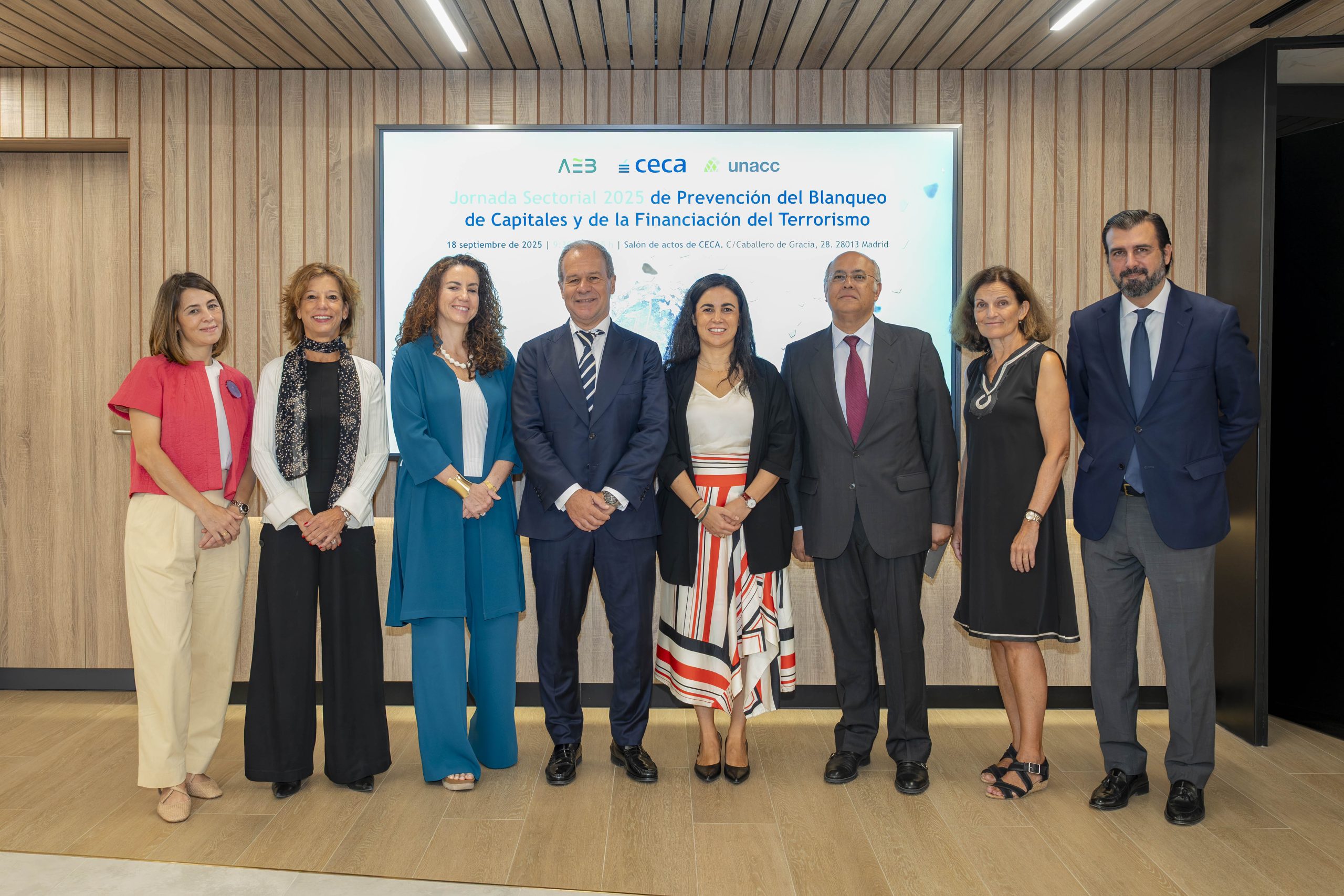
The banking associations AEB, CECA, and UNACC, in collaboration with Sepblac, have organized, for the sixth consecutive year, the Sectoral Conference on the Prevention of Money Laundering and Terrorist Financing, which brings together leading experts from the Spanish banking sector in AML/CFT, supervisory bodies, and regulatory authorities.
The meeting, held in the CECA assembly hall, aims to promote dialogue between the private and public sectors regarding the prevention of money laundering and terrorist financing. Credit institutions stand out particularly for their diligence and compliance in collaborating with authorities to combat this crime, an aspect that has been recognized by reports from international organizations specialized in the field.
The conference was attended by representatives from nearly all credit institutions affiliated with the organizing associations, all of whom specialize in AML/CFT. This new edition focused on updating regulatory developments, the latest risk typologies, the supervisory approach, and other current topics, such as the impact of international financial sanctions and Spain’s candidacy to host the new European authority (AMLA) in Madrid, which is supported by the sector.
The conference was opened by Raquel Cabeza, Corporate Director of Risk and Compliance at CECA, who introduced the first point of the day: regulatory developments, which represent a significant challenge for the industry.
According to Irene Sánchez, Advisory Member of the Treasury’s Sub-Directorate General for Inspection and Control of Capital Movements, the regulatory developments that entities will face in the coming months will be marked by the creation of the new European Anti-Money Laundering Authority (AMLA), the EU AML legislative package, and the Spanish Presidency of the Council of the European Union.
This was followed by three panel discussions featuring representatives from both the public and private sectors, who exchanged knowledge, experiences, and best practices.
The first panel, dedicated to the impact of international financial sanctions with special attention to those arising from the war in Ukraine, included participation from África Pinillos, Head of Supervision at Sepblac; Sergio Tresguerres, Deputy Assistant Director of the Treasury’s Sub-Directorate General for Inspection and Control of Capital Movements; Concha Picón, Director of Sanctions Advisory at Banco Santander; and Roberto Crespi, Team Leader in the Sanctions Unit of DG FISMA-European Commission. María Peco, Senior Advisor for Legal Affairs and Anti-Money Laundering at AEB, moderated this panel.
The second panel discussion, regarding the challenges presented by new typologies and trends in AML/CFT, was moderated by Cristina Freijanes, Secretary General of UNACC. The speakers—Adolfo Bescós, Head of Financial Intelligence Coordination at Sepblac; Margarita Rufas, Head of Planning Coordination at Sepblac; Gregorio Álvarez, Head of the AEAT Unit attached to Sepblac; Evaristo Ramírez Llamas, Head of AML/CFT at Unicaja Banco; and Alfredo Alonso Conde, Head of Legal Services and Regulatory Compliance at Caja Rural de Granada—addressed the quality of suspicious activity reports made by obliged entities and the impact of crypto-assets on the world of prevention, among other topics.
Finally, the last panel, moderated by Raquel Cabeza, focused on current supervisory issues and featured leading national representatives in money laundering prevention: Juan Ramírez, Head of Supervision and Inspection Coordination at Sepblac; Federico Cabañas, Head of the Money Laundering Prevention Group at the Bank of Spain’s Directorate General of Supervision; José María Díaz Taboada, Head of the Money Laundering Prevention Unit at the CNMV; and José Antonio Fernández de Pinto, Deputy Director General of Inspection at the DGSFP.
The sectoral conference concluded with a presentation by Pedro Comín, Director of Sepblac, who thanked the industry for its participation in this event as a fine example of public-private collaboration—a crucial action in an era of challenges that the entire prevention sector will face in the coming years. He explained: “Regarding the future, we must be as well-prepared as possible, but it is also very important to adapt to the changes and unforeseen events that the new authority and the new regulation will entail,” adding: “Our interest as supervisors is for best practices to always become the standards of tomorrow, the norm.”