Home / Latest News / Press releases / Credit institutions strengthen their role in the fight against money laundering
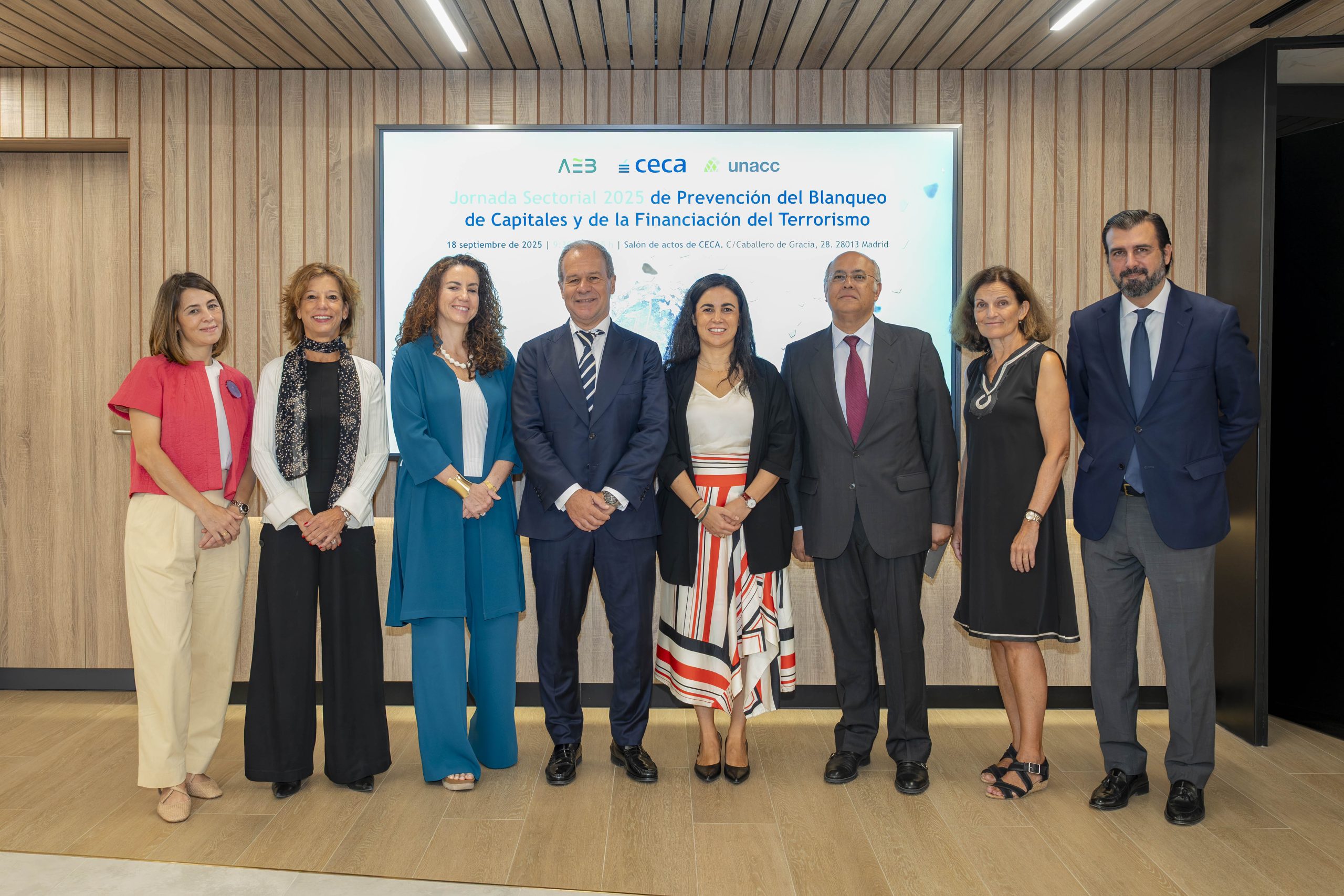
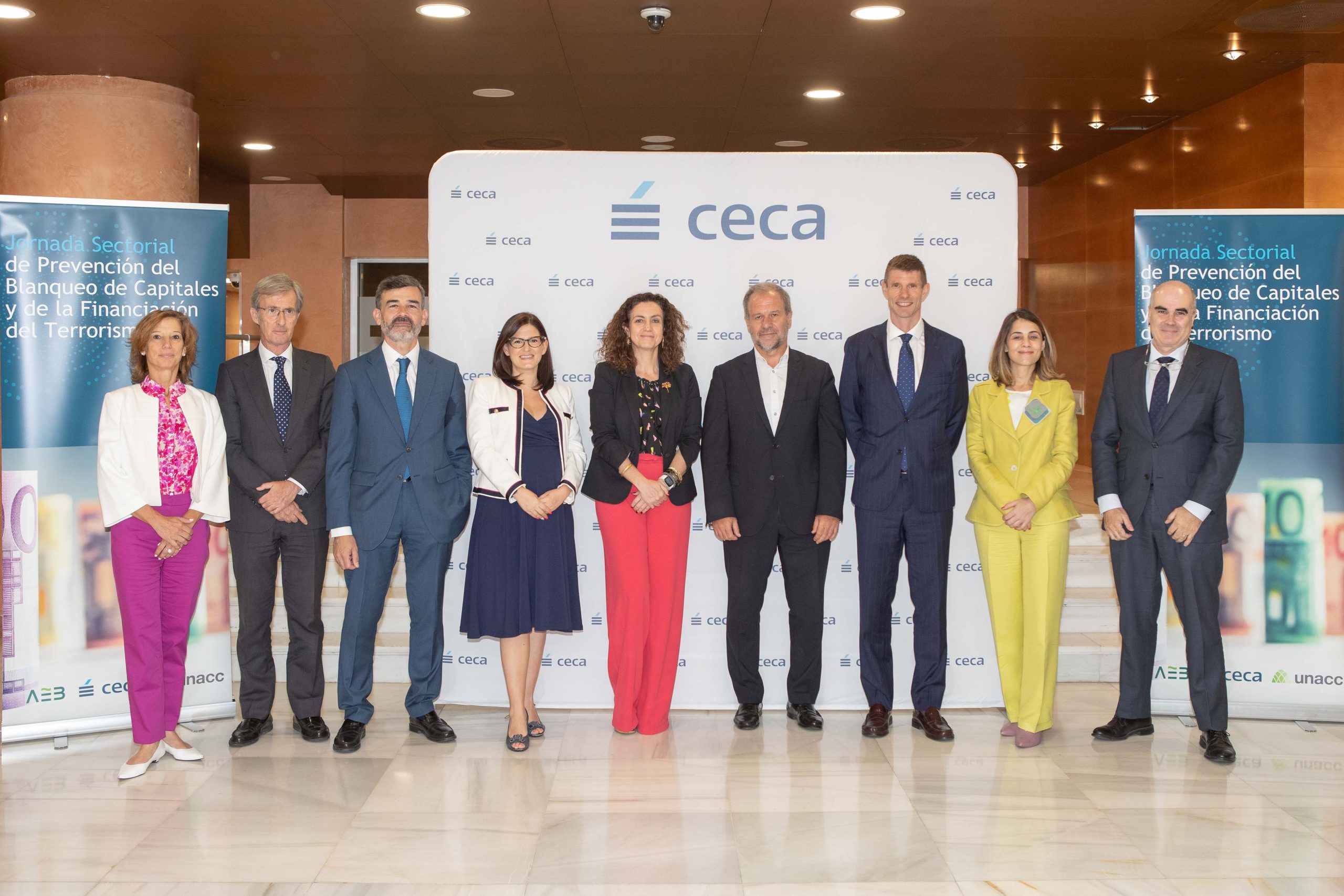
The credit institution associations AEB, CECA, and Unacc, in collaboration with Sepblac, have held the eighth edition of the Sectoral Conference on the Prevention of Money Laundering and Terrorist Financing, which was attended by leading experts in the field, as well as representatives from supervisory bodies and key regulatory authorities.
The event, held at CECA’s headquarters in Madrid, was marked by the recent agreement between the European Central Bank (ECB) and the European authority, the Anti-Money Laundering Authority (AMLA), which establishes a structured framework for cooperation and information exchange to strengthen supervision in money laundering prevention and avoid duplication of efforts.
This agreement exemplifies how coordination between the public sector and collaboration with private banking strengthen a more effective system in the fight against money laundering and terrorist financing (AML/CFT). In this context, Spanish financial institutions stand out for their rigor and commitment to regulatory compliance, as well as their active cooperation with competent authorities, an effort that has received recognition from specialized international bodies.
The conference brought together the main representatives of the credit institutions integrated into the organizing associations, all specialized in AML/CFT, who addressed the latest regulatory developments, new risk typologies, and emerging trends in the field of money laundering.
The event was inaugurated by Lourdes Jiménez Ramos, Deputy Director General of Inspection and Control of Capital Movements at the Treasury, who highlighted the challenges that the private and public sectors will have to face jointly in the coming months, emphasizing the adaptation of the institutional and regulatory framework with the launch of AMLA, as well as the mutual evaluation by the Financial Action Task Force, which will begin in 2026 and will test the state of the Spanish preventive system. AMLA Vice-Chair Juan Manuel Vega Serrano delivered a presentation on the new European authority and the strategic roadmap to strengthen money laundering supervision and aid financial intelligence coordination.
Subsequently, three roundtables were held, focusing on supervision, financial intelligence, and regulatory developments, respectively, with participation from both the public and private sectors.
The first panel, dedicated to developments in supervision and inspection, was moderated by Raquel Cabeza, Corporate Director of Risks and Compliance at CECA. Speakers included Alejandro Valiñas, Head of the Financial Institutions Inspection Division at Sepblac, and Juan Casillas, Head of the Banking, Insurance, and Securities Inspection Unit at the same body. Both presented the conclusions drawn from the most recent inspections, as well as detected findings and upcoming challenges in the future inspection plan, highlighting the importance of coordination between national and European supervisors in a scenario where the new AMLA authority is beginning to assume competencies.
The second panel discussed the most relevant developments and typologies in the field of financial intelligence. The debate was moderated by Cristina Freijanes, Secretary General of UNACC, and featured the participation of Juan Carlos Calleja, Head of the Strategic Intelligence Division at Sepblac; Guillermo Yubero, National Police Inspector in the Central Financial Intelligence Brigade attached to Sepblac; David Saludes Moronval, Director of Regulatory Compliance at Ibercaja Banco; and Luis Francisco Luján Moralejo, Head of Financial Crime Compliance at Banco Santander. The speakers shared their experience on emerging typologies of money laundering and illicit financing, emphasizing the role of public-private cooperation and the need for innovative tools to detect suspicious operations, such as new communications regarding mule accounts and fraud indicators.
Finally, the third panel was moderated by María Peco, Senior Advisor for Legal Affairs and Money Laundering Prevention at AEB. Participants included Irene Sánchez, Advisory Member at the General Secretariat of the Treasury and International Finance; Belén Álvarez, AML/CFT expert from the Non-Financial Inspection Division and Technical Secretariat of Sepblac; and Gemma Serrano Villajos, from the money laundering prevention unit of Caja Rural del Sur. The main purpose of the panel was to explore some of the changes introduced in the recent update of European Union and international regulations and how they impact the national sphere and organizations.
The conference concluded with an address by Pedro Comín, Director of Sepblac, who highlighted the contributions made during the roundtables and underscored the importance of maintaining a solid framework of cooperation among supervisors, authorities, and financial institutions.