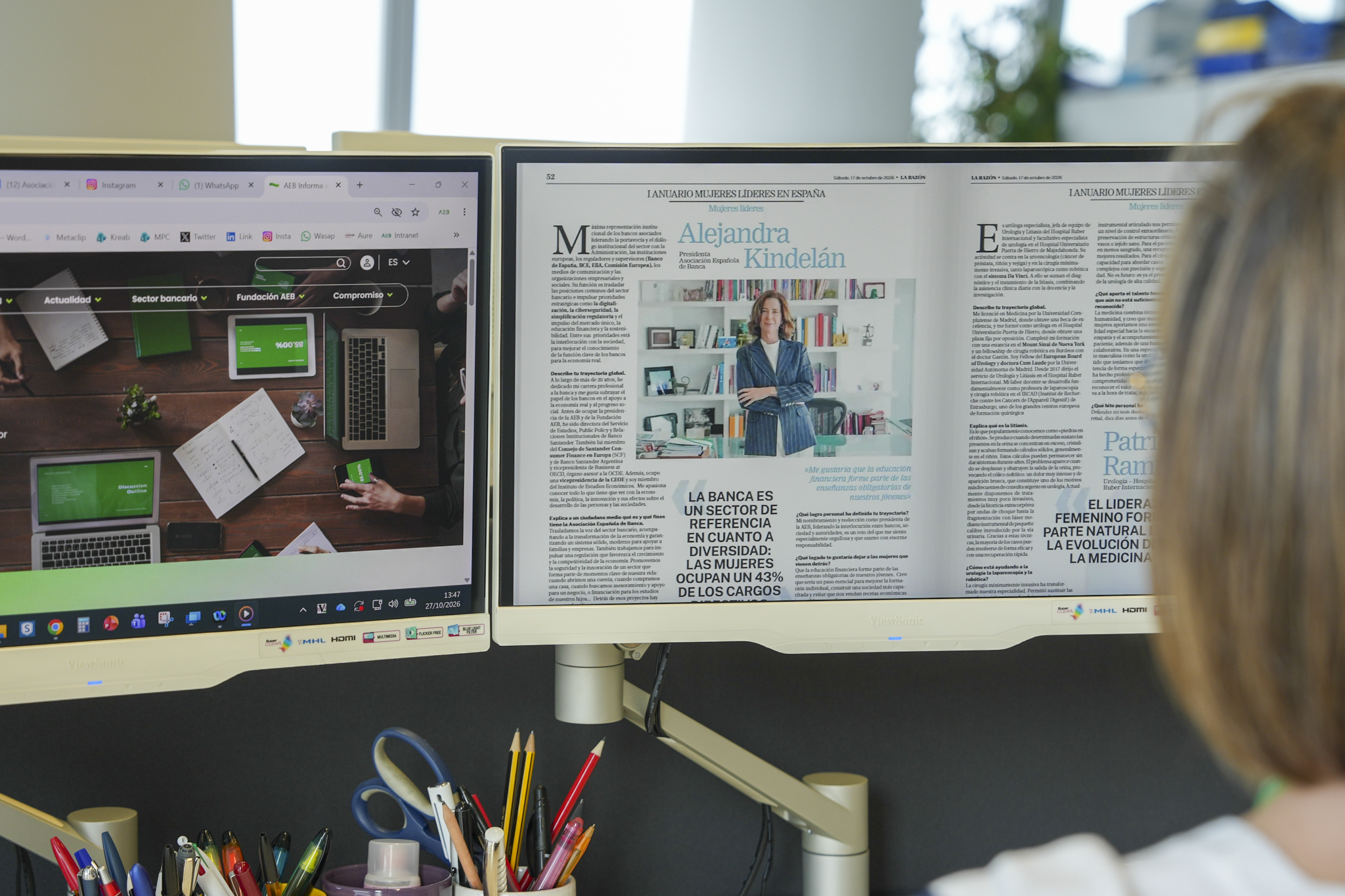
Home / Latest News / You may be interested in / Interviews / “The banking sector is a leader in diversity: women hold 43% of executive positions.”
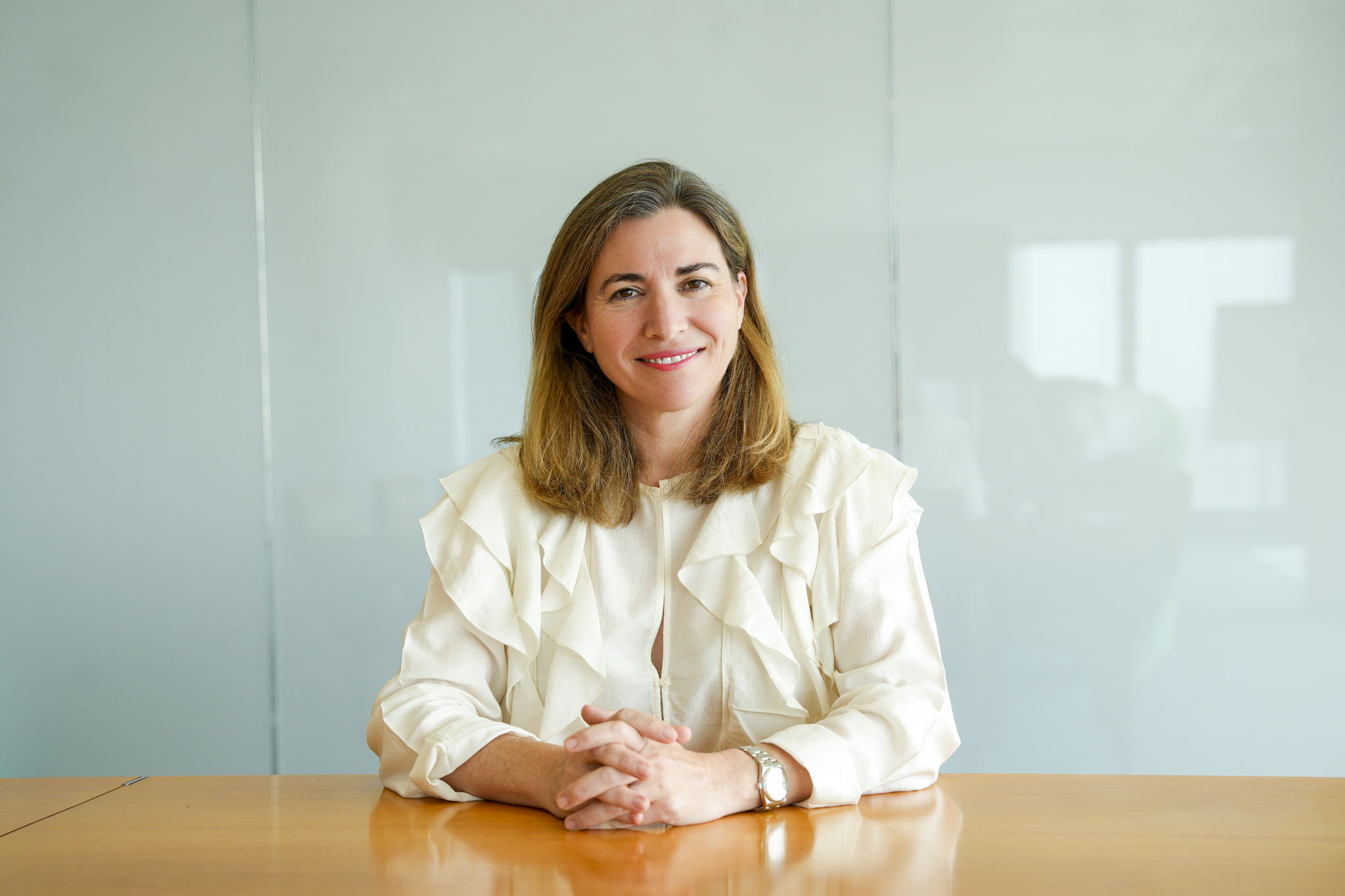
The highest level of institutional representation for member banks, leading the sector’s advocacy and institutional dialogue with the government, European institutions, regulators, and supervisors (Bank of Spain, ECB, EBA, European Commission), the media, and business and social organizations. Its role is to convey the banking sector’s common positions and advance strategic priorities such as digitalization, cybersecurity, regulatory simplification, and the promotion of the single market, financial education, and sustainability. Among its priorities is engaging with society to raise awareness of the key role banks play in the real economy.
Describe your overall career path.
For more than 20 years, I have dedicated my professional career to banking, and I like to emphasize the role banks play in supporting the real economy and social progress. Before serving as president of the AEB and the AEB Foundation, I was director of the Research, Public Policy, and Institutional Relations Department at Banco Santander. I was also a member of the Board of Santander Consumer Finance in Europe (SCF) and of Banco Santander Argentina, as well as vice president of Business at the OECD, an advisory body to the OECD. In addition, I serve as a vice president of the CEOE and am a member of the Institute of Economic Studies. I am passionate about learning everything related to the economy, politics, innovation, and their effects on the development of people and societies.
Explain to the average citizen what the Spanish Banking Association is and what its goals are. We serve as the voice of the banking sector, supporting the transformation of the economy and ensuring a solid, modern system to support families and businesses. We also work to promote regulations that foster economic growth and competitiveness. We promote security and innovation in a sector that plays a role in key moments of our lives: when we open an account, when we buy a home, when we seek advice and support for a business, or financing for our children’s education… Behind these projects are individuals, families, and businesses that need support to move forward. And through the Association, we help create an ecosystem to achieve these goals.
What does female talent—which is still not sufficiently recognized—bring to the table?
Without a doubt, the benefit lies in the greater diversity that enriches the decision-making process. Organizations that incorporate different perspectives are more innovative, understand their customers better, and make better decisions.
What personal achievement has defined your career? My appointment and reelection as president of the AEB, leading the dialogue between banks, society, and authorities, is a challenge of which I am especially proud and which I take on with a great sense of responsibility.
What legacy would you like to leave for the women who come after you?
That financial education be part of the mandatory curriculum for our young people. I believe this would be an essential step toward improving individual education, building a more capable society, and preventing us from being sold impossible and populist economic solutions.
Banking has traditionally been a male-dominated sector. Has this changed?
Yes, the sector has changed significantly and now recognizes talent regardless of labels. There are increasingly more women in leadership positions (43% of executive roles, including chairwomen and CEOs who lead strategic areas and make high-level decisions); we are a leading sector in terms of diversity.