Home / Latest News / You may be interested in / Interviews / “Geopolitics requires the banking sector to be stronger than ever”

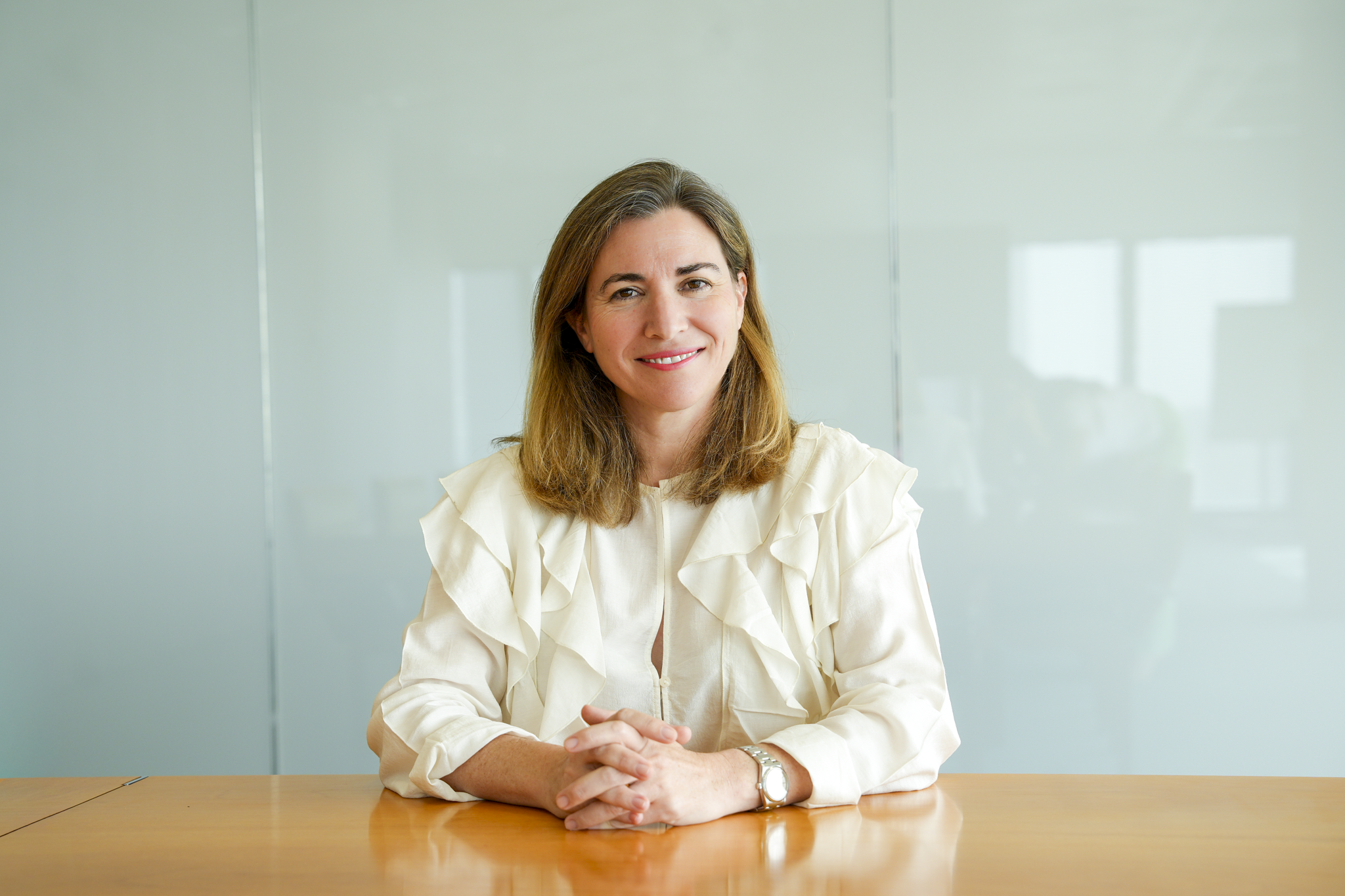
Alejandra Kindelán (Caracas, 1971) holds a degree in Economics and Political Science from Wellesley College (Wellesley, Massachusetts), completed a PDG at IESE (Madrid), and the banking studies program at Insead (Fontainebleau). Following her tenure as an executive at Santander, she has chaired the Spanish Banking Association (AEB) since April 2022, succeeding José María Roldán from Aragon in a role that allows her to “remain part of the sector, with a bit more vision and perspective.”
The banking sector is experiencing a good period. The entities’ results have been positive, benefiting from interest rate hikes. Is that how you see it?
The ten years of zero or negative interest rates were exceptional; that was not normal. There are two explanations. The weight of credit on bank balance sheets in Spain is particularly high, which means that rate hikes are immediately reflected in improved profitability. Secondly, we have a very geographically diversified sector. Spain is home to major banks that generate a significant portion of their profits outside of Spain. In fact, of the 26 billion in results the sector had last year, more than 60% was generated outside of Spain.
Where does that profitability go?
Ultimately, that profitability and strength allow us to generate capital to continue lending at a time when significant investment is needed. That profitability also goes to shareholders. Spanish banking has nearly 5.5 million shareholders, most of whom are retail investors and families. It is positive that bank dividends complement the income of Spanish families, who are not just four men in top hats and cigars receiving a dividend.
What else do banks contribute?
Spanish banking pays a lot of taxes. We have a corporate tax rate higher than other sectors—we pay 30%—but there are also taxes on deposits, on documented legal acts, and now we have the famous levy. The sector’s tax pressure exceeds 60%.
How much have your taxes increased with the levy?
According to a study by PriceWaterhouseCoopers, the tax pressure was 51% before the levy and is now 60% or 61%.
The Government argued that the banking sector had to “shoulder the burden” for the country.
The high tax pressure and all the taxes the sector pays are a very clear way of shouldering the burden. Furthermore, there is the contribution we make to the economy and society. As soon as they open their doors, bank branches are providing credit, helping citizens fulfill their projects and dreams. We have helped resolve problems, for example, in rural Spain, with the elderly through best practices… The tax was announced during a State of the Nation debate, without prior notice.
Were you not told anything beforehand?
We found out through the speech (by President Sánchez). The tax is based on two false premises. One, “windfall profits,” when as we’ve said, the ten years of zero or negative interest rates were the exception. That generates profitability, yes, but it is important for banking to be profitable.
And the other fallacy?
The bank bailout, which wasn’t even a bailout for the banks. Support was given to entities that are no longer here. And those that are still here contributed 22 billion euros to the deposit guarantee fund, as well as 2.6 billion to Sareb.
What are your relations with the Government like?
Continuous and constant. We have daily contact on various issues. Last week we had an event on responsible finance. We have discussed digitalization with several ministries. The relationship is fluid; we talk about many things and, of course, we say what we don’t like.
But the levy will remain.
The Government is proposing that it be permanent, which surprises us, especially this year when rates are already pointing downwards. On the other hand, there is also geopolitical uncertainty—the risks currently present in the world—which require banking to be stronger than ever. There are risks, for example, in what is called commercial real estate, which is not a problem in Spain but is in the United States or Germany. We could have turbulence in the financial markets and we must be prepared, with the best possible capital levels. A tax is not what the sector needs right now.
Is the sector well-sized, will there be more mergers?
There is a good level of competition in Spain. Credit prices for SMEs or mortgage loans are below the European average. We have small, local, and global players. Perhaps what I would speak of is European ambition—a truly integrated banking market. We lack that. Much progress was made during the previous crisis, but we need to take it a step further. Today we have a single supervisor, but we lack a single deposit guarantee fund that would allow banks to be truly European. Otherwise, they continue to be valued based on their nationality rather than their solvency.
The Government has just approved a bill to create the Customer Defense Authority. Was it necessary?
We believe that anything that improves consumer protection is a good idea. However, we argue that the existing system—the claims system at the Bank of Spain, the CNMV, and the Insurance Directorate—could have been improved. Creating a new authority may generate expenses that we currently cannot foresee.
You chair the AEB, but there is another banking association, CECA, for the former savings banks. Are you considering a merger?
The truth is that we work very well together. We work side-by-side with CECA and also with UNACC, which represents credit cooperatives and rural savings banks. That is enriching. We have continuous collaboration and hardly have time to even think about a merger.
Interview conducted by Luis H. Menéndez