Home / Latest News / You may be interested in / AEB Informs / “There can be no transition to a sustainable economy without involving SMEs.”
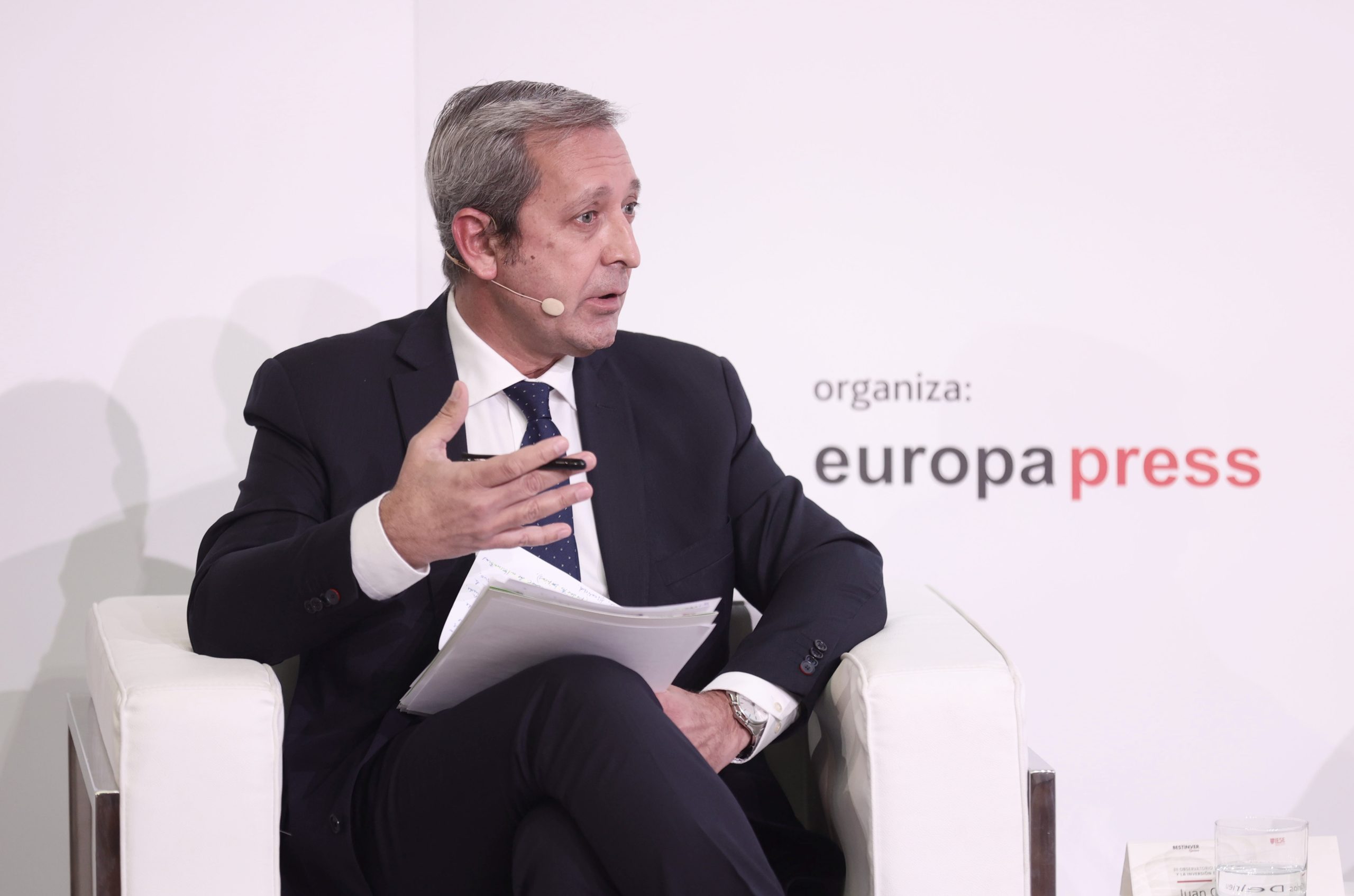
Interview with our Director of Strategy and Sustainability, Juan Carlos Delrieu, on the occasion of the University of the Basque Country UPV/EHU summer courses
As important as the risk of greenwashing is the risk of timewashing, that is, the time lost when inaction is justified by a lack of data or incomplete regulation. The important thing is to start taking action and be willing to generate impact in the environment in which you operate.
“There can be no transition to a sustainable economy and reality without involving small and medium-sized enterprises, which make up the productive fabric of our country (96% of Spanish companies have fewer than 10 employees). If we do not manage to convince SMEs of the opportunity that adapting to climate change represents, the effort being made by large companies and the financial system will be insufficient. SMEs have to get on board the sustainability train but, for the time being, they are interpreting it as an increase in costs without yet appreciating the benefits that come from committing to sustainability.”
There is a two-way relationship between companies and financial institutions. Banks are committed to the transformation required to mitigate the risks arising from climate change through European regulation and increasingly demanding supervision by central banks; in addition, they are taking on a series of very ambitious public commitments, such as those arising, for example, from the Collaborative Climate Action Commitment signed by 95% of Spanish banks, with far-reaching obligations. Therefore, the most effective approach is for peers to speak the same language. Banks, by fulfilling their advisory role and providing new financial instruments and products with special financial terms, and companies, by conveying their willingness to change and providing real project data to support their transformation towards a more environmentally friendly world. Managing and communicating sustainability metrics facilitates dialogue with banks and improves companies’ financial terms.
In addition, credibility on these issues can be measured, even if only qualitatively. As Juan Carlos Delrieu, AEB (Spanish Banking Association) Director of Strategy and Sustainability and member of the Finresp (Centre for Responsible and Sustainable Finance) Steering Committee, notes, “having a transformation plan, having the executive team and the board of directors involved in these issues, and demonstrating that you want to generate impact through your actions are signs of a firm commitment”. It is very important to see a committed team, changes in production processes, or an agenda of actions in favour of their social environment. Demonstrating a willingness to change is as important as complying with climate regulations. “Those who have the will to transform, have it.”
However, companies that still have doubts about the importance of incorporating the environmental, social or governance criteria encompassed by the concept of sustainability may be more receptive at this time. There is no doubt that the extraordinary aid coming from Europe will be a major incentive because it requires 37% of it to be allocated to sustainable projects. Therefore, had we not received the recovery funds, it is likely that, despite the European Green Deal, we would be embarking on a path of adjustment towards a sustainable economy in our country more slowly.
Banks and companies promoting their green credentials does not necessarily have to be viewed negatively. On the contrary, we are at a stage in which awareness-raising and outreach should be viewed very positively. The transformation towards sustainability is a journey, a process in which there is still a long way to go. For this reason, Juan Carlos Delrieu strongly defends the financial system’s determination to drive this transformation in the course organised by Elkargi on “The impact of sustainability on SMEs. An opportunity for the future” as part of the UPV/EHU Summer Courses.
The banking sector is working proactively, cooperating and exchanging best practices, and taking on a series of very demanding public commitments. In 2019, the main Spanish banks signed up to the Principles for Responsible Banking, an agreement that undoubtedly marks a turning point for banking, the way it operates and its environment. From that moment, at the end of that same year, in the context of COP25 in Madrid, 95% of Spanish banks signed a Collaborative Climate Action Commitment, which entails aligning banks’ portfolios with the Paris Agreement by 2030. More recently, major banks have joined the Glasgow Financial Alliance to Net Zero (GFANZ), which represents a further step and a commitment to decarbonising the system by 2050.
But this is not the only action banks are taking to demonstrate their firm commitment to contributing to a low-carbon and more sustainable economy. In fact, the function has ceased to be concentrated in CSR areas and has reached the company CEO’s office and even the board of directors. This determination is influenced by the regulatory framework and central banks’ supervisory expectations, as well as by shareholders themselves, as Larry Fink, CEO of investment fund BlackRock, reminds us every year.
Another detail demonstrating the financial sector’s commitment to contributing to this transformation was the creation of the Center for Responsible and Sustainable Finance (FinResp) which, under the umbrella of the global network linked to the United Nations (Financial Center for Sustainability -FC4S-), was established with the aim of involving the entire Spanish productive system in a sustainable transformation. To this end, they view social awareness as a raw material; therefore, one of their primary objectives is the role that the world of finance must play in this transition by making it easier for SMEs—perhaps the missing link in a society highly sensitive to climate change—to understand the benefits of this transformation and helping them capitalize on the opportunities arising during the transition toward a carbon-neutral economy. However, Juan Carlos Delrieu points out that beyond awareness and dissemination, Finresp has established that training, the exchange of best practices among financial institutions, as well as with other centers worldwide, and the identification of innovative financing formulas are also essential elements of the Center’s strategic agenda in Spain.
Regarding regulation, it is clear that the EU has decided to champion the green agenda, although Biden’s arrival as President of the United States not only reinforces the policies designed in Europe but will probably end up extending them beyond our region. Among them, the Taxonomy Regulation stands out, a rule that is as necessary as it is, for the time being, complex to apply. However, in its role as a “dictionary” it is already fulfilling its function, which is to go beyond the original design linked to financial investments and shape any debate within the EU. A compass with the firm purpose of mobilising private capital while mitigating the risk of greenwashing. That said, despite the favourable purpose of the regulatory framework the EU is designing, Juan Carlos Delrieu believes it might be advisable to “move a little more slowly on regulatory issues because our economies are under pressure and the difficulties that arise from the complexity and ambiguity of the system may tend to paralyse us, with the risk that inaction could end up being as high as greenwashing”. It may be far more appropriate to clearly define a level playing field through rules and, once inside it, promote companies’ transformative ambition. In this regard, the shared responsibility of the public administration is essential to speed up the transformation process.
“The design of the green economy we want should not fall solely on the banking sector. Even if we are willing to contribute to this productive and social transformation and are willing to finance it, the country’s design, the path and the speed of change must be in the hands of the public administration.”
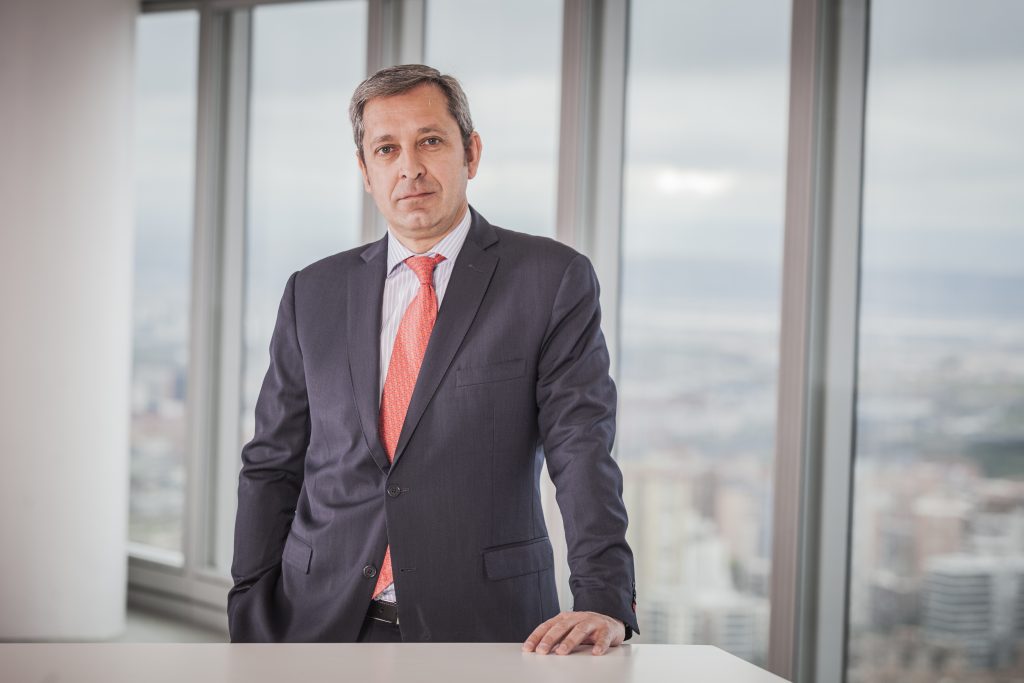
Juan Carlos Delrieu, Director of Strategy and Sustainability at the Spanish Banking Association