Home / Latest News / You may be interested in / AEB Informs / Shadow banking: increasingly large and complex
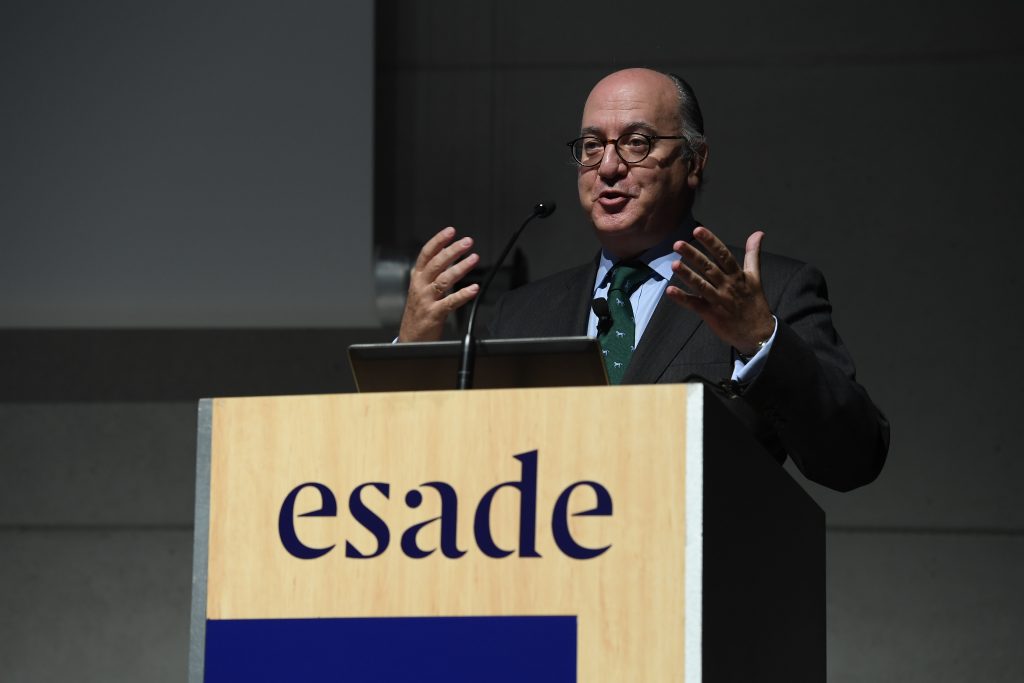
The green revolution and digital transformation are adding new layers of complexity to a shadow financial system that was already highly complex and largely responsible for the 2007–2012 global financial crisis. The president of the AEB, José María Roldán, presented these ideas during his lecture titled “Future Challenges: Old Problems in New Shapes” at the Esade campus in Barcelona.
The president of the AEB noted that the crisis triggered a regulatory wave that served to improve the resilience of traditional banks. In fact, “nearly two years after the Covid-19 outbreak, the banking sector has been a source of strength and part of the solution to problems during and after the pandemic.” However, he specified, shadow banking institutions—such as insurance companies, hedge funds, and investment vehicles—continue to grow while avoiding the regulations that have strengthened the banking sector.
Not only that. He pointed out that new intermediaries and instruments emerging from digitalization processes and the fight against climate change are adding complexity and a lack of transparency to the shadow financial system. Both processes have seen a sharp acceleration during the pandemic. “Undoubtedly, the green revolution—a new ecosystem created from scratch in a couple of years—is here to stay, bringing with it an enormous burden of complexity, risks, and uncertainties.”
In short, “we have the shadow banking sector, we have the digital world adding a layer of complexity, and furthermore, the new green ecosystem adding even more complexity. Authorities had and still have difficulties understanding what was happening in the shadow banking sector, but now they face an even greater challenge.”
In this regard, he added that “authorities know they have a problem they must address sooner rather than later, because the digital and green revolutions are advancing very rapidly. But I do not think they yet have a clear idea of what needs to be done.” The problem, in his opinion, is that by the time authorities decide what to do and begin monitoring what is happening with reliable data, it may already be too late. The president of the AEB therefore encouraged “not setting aside the problem of shadow banking and striving to understand the new fragilities being created right now within the financial ecosystem.”