Home / Latest News / You may be interested in / AEB Informs / Financial literacy
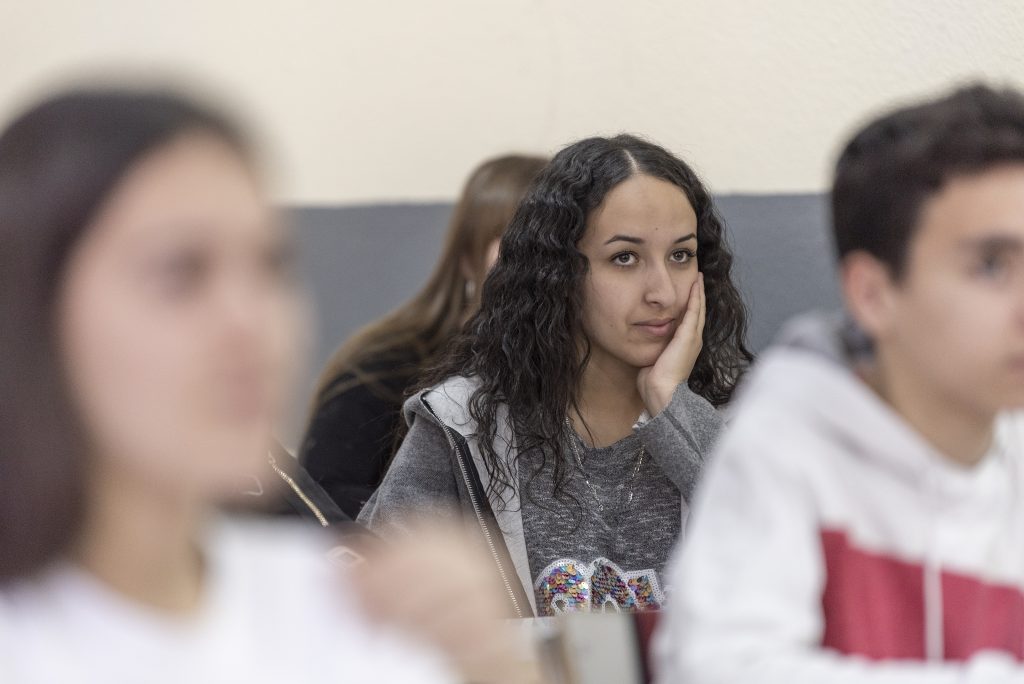
According to the Financial Competences Survey by the Bank of Spain and the CNMV, 46% of the Spanish population acknowledge that their financial knowledge is low or very low. This is, without doubt, a worrying figure. Perhaps even more troubling, however, are the results of the OECD’s PISA report on our children’s financial knowledge. Spain ranks 11th out of the fifteen countries analysed in financial education, and 15% of students lack even the most basic financial knowledge. Reversing these results should be an objective for society as a whole, which requires families and the education authorities to become firmly involved.
Many consider economics to be the science of scarcity. This is not a bad definition, since we are all aware of the scarcity of resources to meet human needs and desires, which far exceed what is available. In this context, we are forced to make financial decisions—of greater or lesser importance—every day. To avoid acting hastily and facing shocks or long-term problems, it is necessary to have financial knowledge—“financial literacy”, as some would say—and to control our impulses when it comes to consumption.
We make decisions freely and are responsible for their consequences, so having the best possible education from the beginning contributes to the proper management of our personal finances, to better handling our money, something necessary at all stages of life. It is important that from an early age we are aware of what things cost, that we learn to differentiate between wants and needs, and that we become accustomed to thinking about saving for the future. These are basic notions of financial education that should be conveyed naturally at home and learned at school. At the Foundation of the Spanish Banking Association (AEB), we have always been clear about this, which led us eight years ago to promote the “Your finances, your future” project thanks to the collaboration of our partner banks. Since its launch, more than 40,700 secondary school students from schools across Spain have benefited from its programmes, delivered throughout this period by more than 3,000 volunteer bank employees. The latest edition of the programme, which began at the most challenging moments of the pandemic in March 2020, was able to continue thanks to the dedication and commitment to continuity of these volunteers, who delivered the classes online in line with public health recommendations.
With the collaboration of the renowned Junior Achievement Foundation, the programmes cover basic topics in finance, cybersecurity and responsible consumption. According to the impact assessment of the latest programme, 98% of students consider that they are now more aware of the importance of saving and want to repeat the experience. The same is true of all the educational centres where the programme was delivered, which appreciate the key role played by volunteer bank employees in young people’s education. For their part, the volunteers also give a very positive assessment of the programme, aware of the importance of fostering the development of healthy financial habits in young people with a view to everyday decision-making in the future.
Now that the light at the end of the pandemic tunnel is coming into view, it is a good time to assess, in a reasoned way, the decisions we expect to make, since as confidence in the future improves, we could see an increase in consumption that was pent up during the health crisis and pushed the savings rate to historic highs worldwide.
The low level of financial education in Spain has always concerned the financial sector, but even more so in the current context, because the ability to manage money and think critically is an indispensable requirement for any individual, with a significant impact on both financial stability and overall economic performance. Countries with a higher level of financial education show greater resilience to crisis and recover faster than the rest.
José Luis Martínez Campuzano, spokesperson for the Spanish Banking Association