Home / Latest News / Press releases / Banks advance in applying the six Principles for Responsible Banking to their daily operations
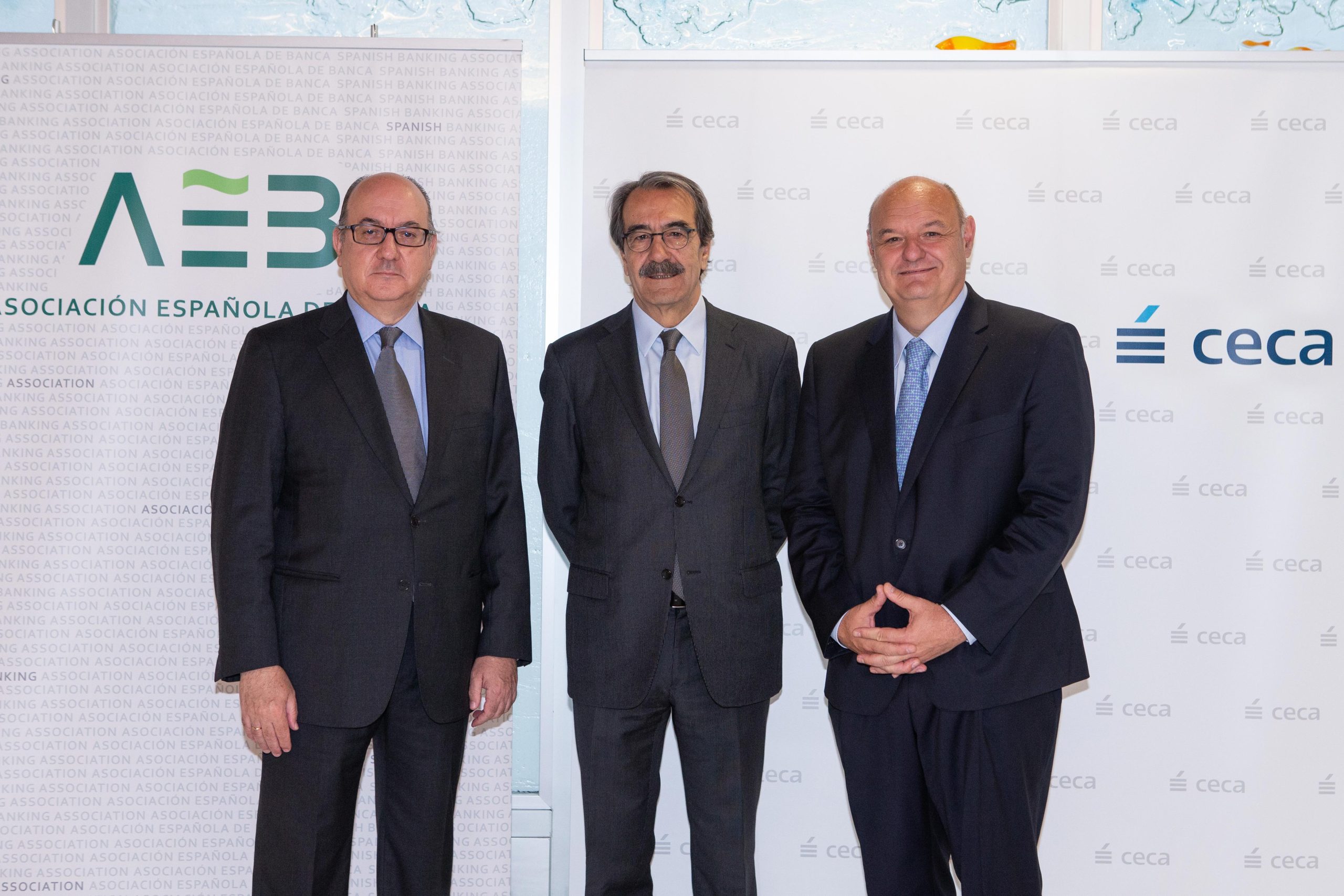
Experts from the financial sector, investors, business world, NGOs and authorities addressed today in Madrid the challenges facing banks to comply with the Principles for Responsible Banking, an initiative of the United Nations Environment Programme (UNEP FI) that establishes a global standard on what a responsible bank is and represents the first global framework for the sector to incorporate sustainability into all business areas.
Through their adherence to the Principles for Responsible Banking, around fifty signatory banks—including Spanish institutions such as Santander, BBVA, CaixaBank and Bankia—have formalised their commitment to align their business activities with the United Nations Sustainable Development Goals (SDGs) and the Paris Agreement on climate change.
According to the President of the Spanish Banking Association (AEB), José María Roldán, “the major challenge now is how to apply the six principles in banks’ day-to-day operations. Once again, banks will have to make a major effort to undertake the transformation required by these Principles. Profound changes are needed in management, decision-making processes, organisational culture, and the development of responsible and ethical leadership capabilities”.
“Despite these new requirements, our banks are not going to miss this unique opportunity to be recognised as a leading player in building the fairer and more sustainable society we all want,” Roldán stressed during the event ‘Principles for Responsible Banking and their impact on society’, organised by AEB and CECA.
In his presentation, the President of AFI, Emilio Ontiveros, highlighted that “Spanish banking has the opportunity to embrace the challenge of integrating the risks arising from climate change into its activity, as central banks and supervisors already do, assessing the impact of these risks on financial stability”. These risks, associated with climate change, “are unique and analytically complex, given that their time distribution and the estimation of their probabilities are not easy,” he added.
In Ontiveros’ view, “the investor community is increasingly aware of these requirements and banking, far from acting reactively, can lead the adaptation to these new criteria. Preferences for green financing instruments, from bonds to other types of credit investment, represent an opportunity that some Spanish companies are already taking advantage of”.
The Director General of CECA, José María Méndez, who closed the event, stated that “building a more sustainable economy will be key in the next decade: sustainability in all its social and environmental dimensions must become an integral part of our economy”. He also explained that today the sustainability debate is heavily focused on ensuring the achievement of the UN Sustainable Development Goals (SDGs) by 2030, and that meeting these goals will require ongoing effort and the participation of all stakeholders.