Home / Latest News / You may be interested in / Articles / The banking sector ‘lends a hand’
Last week’s Ecofin and financial sector meetings in Prague provided an opportunity to address the challenges facing Europe, with an energy crisis already impacting economies and markets, and relentless inflation. Given this situation, what is expected of the banking sector? The answer was repeated in all conversations: “we need strong and committed banks to support citizens and businesses during these difficult times.”
The banking sector has always demonstrated its commitment to economic growth and social responsibility. During the pandemic, mortgage and other credit moratoriums were agreed upon, pension and unemployment benefits were advanced, and 140 billion euros in credit, partly with public guarantees, reached 750,000 companies quickly and efficiently thanks to the efforts of sector employees who kept their offices open.
In the current climate of uncertainty, we know that security, solvency, and solidarity are expected from the banking sector. However, the way to achieve this is not through a tax that limits the capacity to support the real economy and is counterproductive in the fight against the effects of inflation. This levy will impact credit: a reduction of 50 billion, according to sector estimates, equivalent to 250,000 average mortgages. This setback will affect GDP and employment, leading to the loss of between 25,000 and 35,000 jobs. If we add the negative message conveyed to investors regarding regulatory stability and legal certainty in Spain, and the reduction in returns for 6 million retail shareholders, the result is a burden that creates new problems without solving existing ones.
We have always “lent a hand.” The most recent proof is the work of the three associations, AEB, CECA, and UNACC, to expand personalized attention for the elderly, strengthen financial and digital education, and increase access points to financial services in rural areas. These initiatives, aimed at improving people’s lives, have been developed within a context of intense public-private collaboration.
It is therefore surprising that, instead of opting for cooperation, imposition has been chosen. We have been compelled to participate in an “income pact” with a tax that singles out and stigmatizes the sector, and which is motivated by a series of accounting, fiscal, and labor conjectures that do not correspond to reality. It is described as a “non-tax public patrimonial benefit,” but it is nothing more than a tax that will be managed as such and will finance public spending.
Regarding its processing, we regret not having had the opportunity to express our opinion. The Bill bypasses public consultation and all mandatory reports, which undoubtedly affects the quality of a regulation that makes Spain an incomprehensible European exception and burdens its entities in the global market.
The experience of the great financial crisis tells us that the solvency and profitability of banks are factors of stability and security. It also shows that political interference in their management has left a bill that society and banks have paid (23 billion euros through the deposit guarantee fund and 2.6 billion euros to Sareb) to save the deposits of millions of citizens.
Similarly, the COVID crisis has taught us that by working together—government, financial sector, and businesses—we are capable of providing effective responses, and constructive collaboration multiplies benefits for society. That, in my view, is the best way to “lend a hand.”
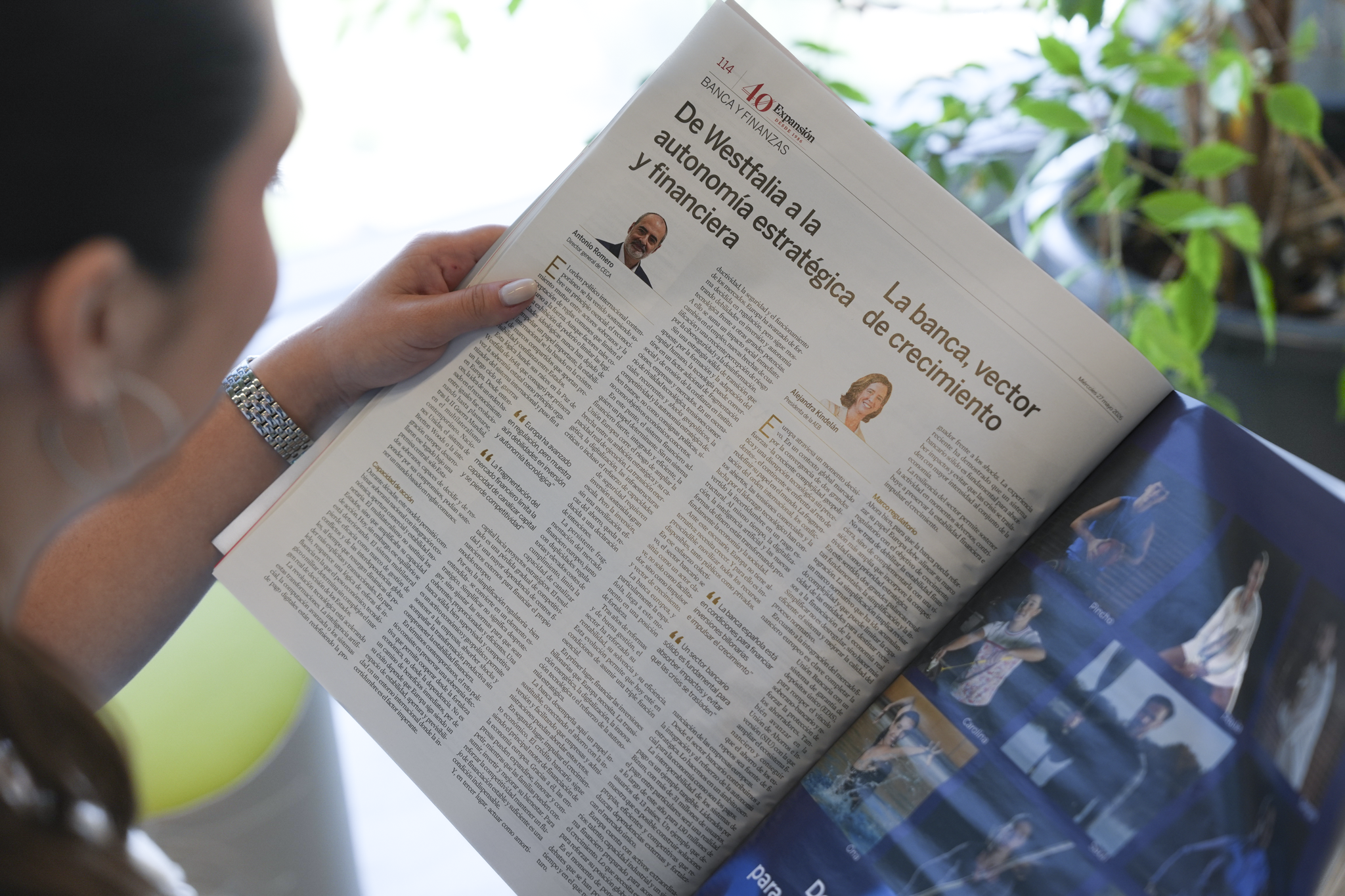
Alejandra Kindelán, President of the Spanish Banking Association