Home / Latest News / Press releases / The banking sector has continued to make progress in 2023 to strengthen financial inclusion and its social commitment.
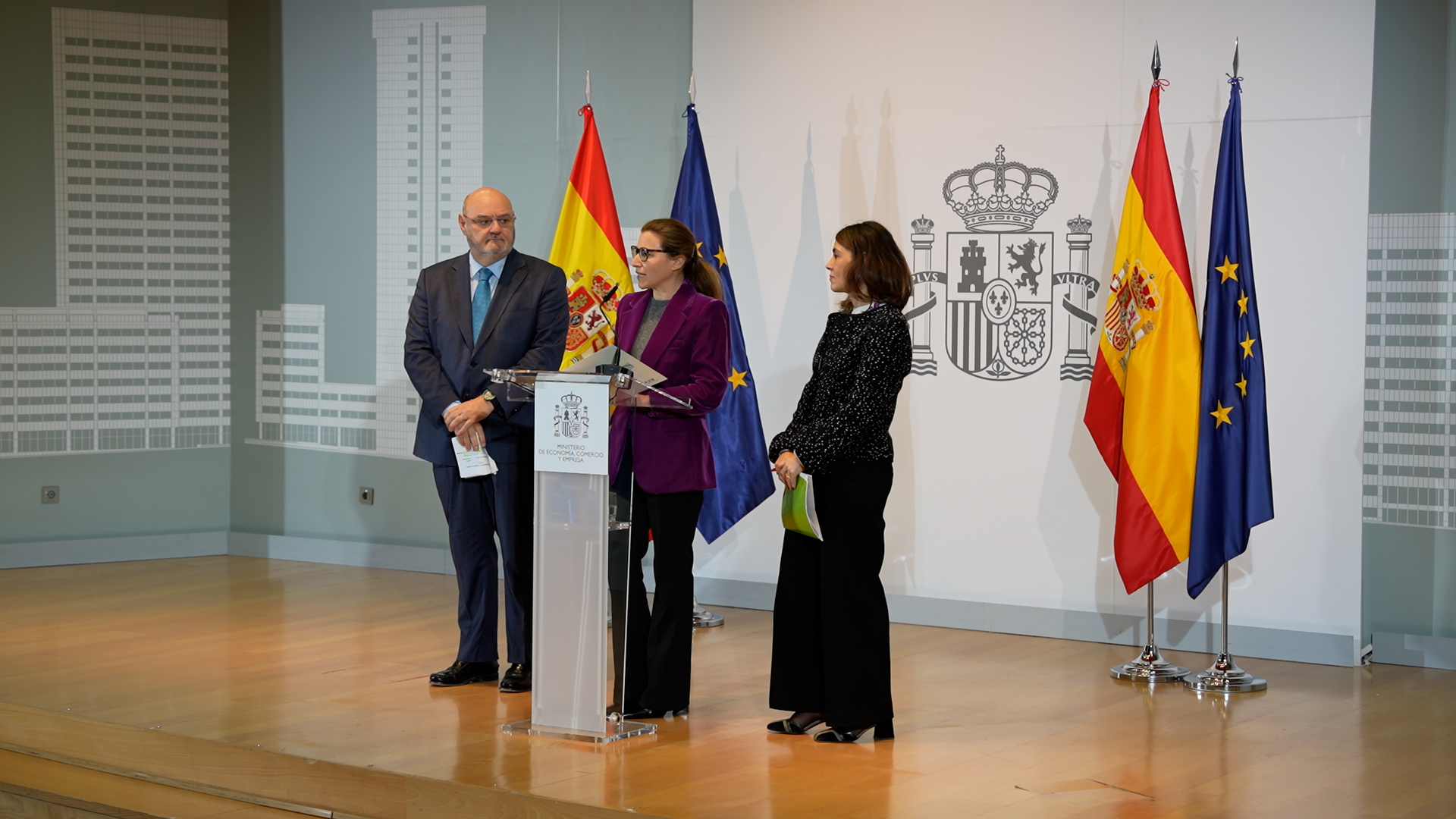
AEB, CECA, and Unacc held a meeting with the Ministry of Economy, Trade, and Enterprise where the notable progress made by the banking sector in its social commitment was confirmed, improving the financial education of society and promoting the financial inclusion of the elderly and those in rural areas. Additionally, the Ministry has proposed deepening the support offered to mortgage debtors facing difficult situations.
During the meeting, the associations highlighted the goals assumed and met within the scope of financial inclusion under the Strategic Protocol to strengthen the Social and Sustainable Commitment of Banking. Within this framework, they emphasized the efforts made to promote financial and digital education, including the creation of a web platform for training resources and the promotion of training for the elderly, resulting in 277,000 people accessing educational initiatives on financial knowledge and digital skills during the first six months of the year.
To this must be added the development of the Decalogue of measures to improve personalized service for the elderly and people with disabilities, which has allowed 82.2% of branches to provide service with extended hours, benefiting 5.6 million elderly people during the first half of this year.
Regarding the commitments made in the Roadmap to strengthen financial inclusion in rural areas, AEB, CECA, and Unacc stated that 93% of municipalities with more than 500 inhabitants that lacked a physical access point to basic financial services a year ago will now have one, as it is either already available or in process; this represents a significant advance in the financial inclusion of rural areas and confirms the ultimate goal of offering a face-to-face access point to financial services through various channels in all Spanish municipalities.
During the meeting, the Government reported on the extension of mortgage support measures, such as increasing the income threshold required to qualify for the Code of Good Mortgage Practices (CBPH) to alleviate the rise in interest rates on primary residence mortgage loans, or the extension of the fee-free period for switching mortgage loan types.
From the sector, we reiterate the preventive nature of the measures included in the CBPH; in an economic context of great uncertainty and one year after its entry into force, many uncertainties have been resolved. On one hand, interest rates have entered a phase of clear stabilization, and on the other, employment is showing better resilience than expected. Proof of this is that the delinquency level is now lower than it was when these measures were approved a year ago.
Additionally, banking entities continue to offer personalized private solutions to those borrowers who may be experiencing liquidity problems beyond what is strictly provided for by the codes. This is demonstrated by the figures for renegotiations, which have increased by just over 300% compared to the same period the previous year, reaching 2.2 billion euros in the first half of 2023.
The success of measures like this is that anyone with a problem has a solution. And in this case, the solution lies in the CBPH or in the bilateral relationship with the entity.
The associations reiterate that it is also important to have a secure and predictable framework so that families know what they can do and how to do it; therefore, it is essential that what was agreed today remains unchanged during the term of the CBPH.
In any case, the sector reaffirms that measures like this demonstrate the banking sector’s willingness to continue advancing in social inclusion, especially through measures aimed at the most vulnerable groups.