Home / Latest News / Press releases / The banking sector engages in dialogue with various social stakeholders on sustainability, digitalization, and financial education.
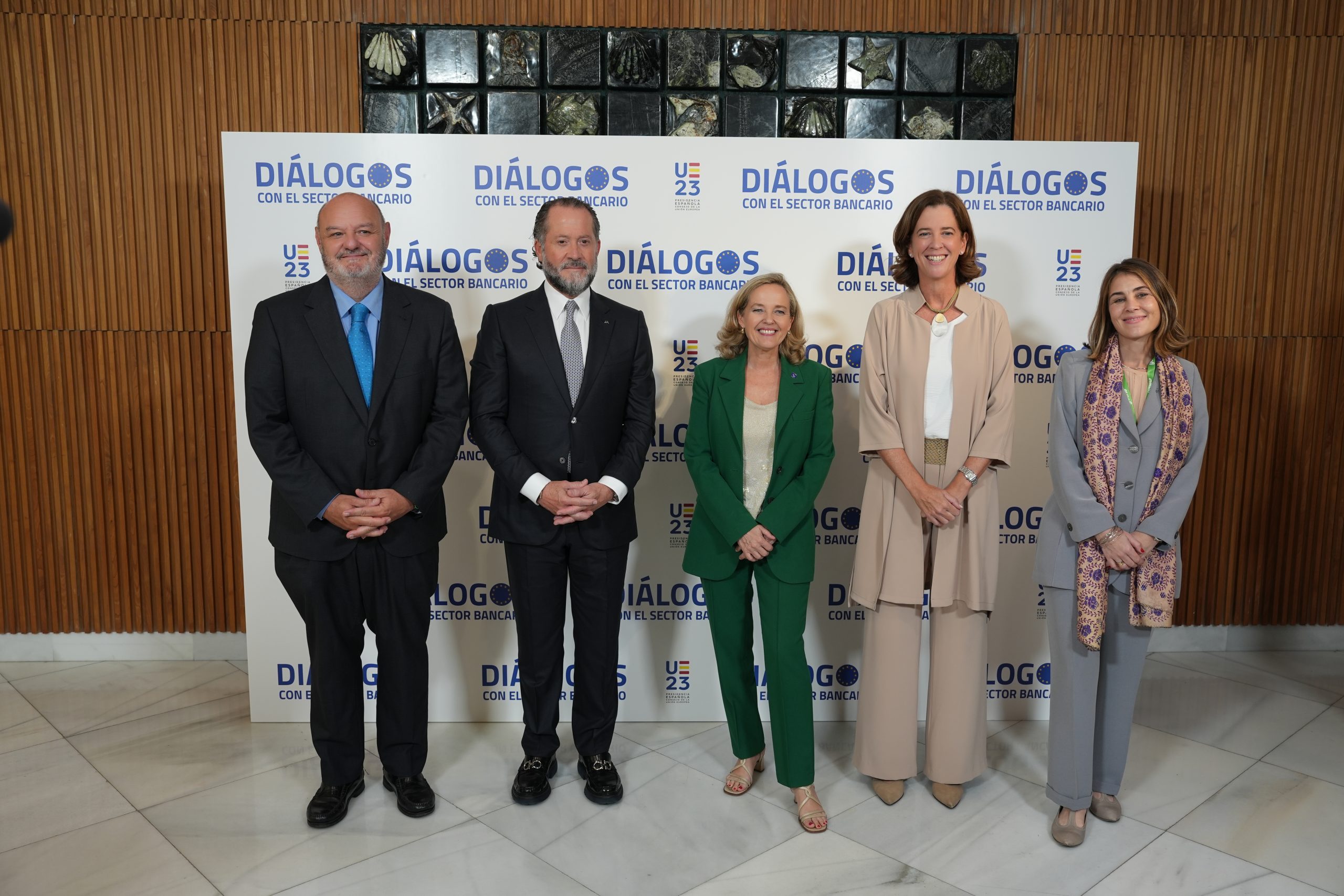
The banking associations AEB, CECA, and Unacc, in collaboration with the Spanish Presidency of the Council of the European Union and with the support of Abanca, organized the event “Dialogues with the banking sector for economic and social progress,” as part of the international and Latin American meetings being held in Santiago de Compostela.
The event, which took place at the Abanca Sociocultural Center in the same city and was opened by the chairman of Abanca, Juan Carlos Escotet, provided a reflection on the present and future challenges facing the banking sector regarding sustainability, digitalization, and financial education—the central themes of the panel discussions held.
To this end, senior officials from the Ministry of Economic Affairs and Digital Transformation, the Public Treasury, the Bank of Spain, the Regional Government of Galicia, and Latin American institutions took part. Representatives from the AEB, CECA, and Unacc trade associations, as well as their member entities, also participated.
During the opening of the event, the president of the Regional Government of Galicia, Alfonso Rueda, highlighted the opportunity that holding events like this in Santiago provided for the international promotion of Galicia within the framework of the Spanish Presidency of the Council of the EU. Furthermore, he stated “the need for the participation of companies and banks to move forward in economic progress, which is what leads to social advances.”
At the panel “Banks as a driver of economic growth: domestic and international“, the Director General of CECA, José María Méndez, elaborated on the banking sector’s contributions to addressing regulatory challenges during the Spanish Presidency and highlighted that “banking generates a fourfold impact: financial and social inclusion, thanks to its extensive reach; the payment of taxes; job creation; and the boosting of the sustainable economy”.
Subsequently, the sector began the banking dialogues on current and future challenges in terms of sustainability, digitalization and innovation, and social commitment and financial education. In this regard, the general secretary of UNACC, Cristina Freijanes, addressed the challenge posed by the sector’s social commitment, how it will evolve in the future, and that, in any case, “it must take into account the financial inclusion of all social groups in the face of unstoppable digitalization.” She also believes that the banking sector will know how to address the challenges it faces because, “if we have proven anything, it is that we are capable of adapting in a timely and appropriate manner.”
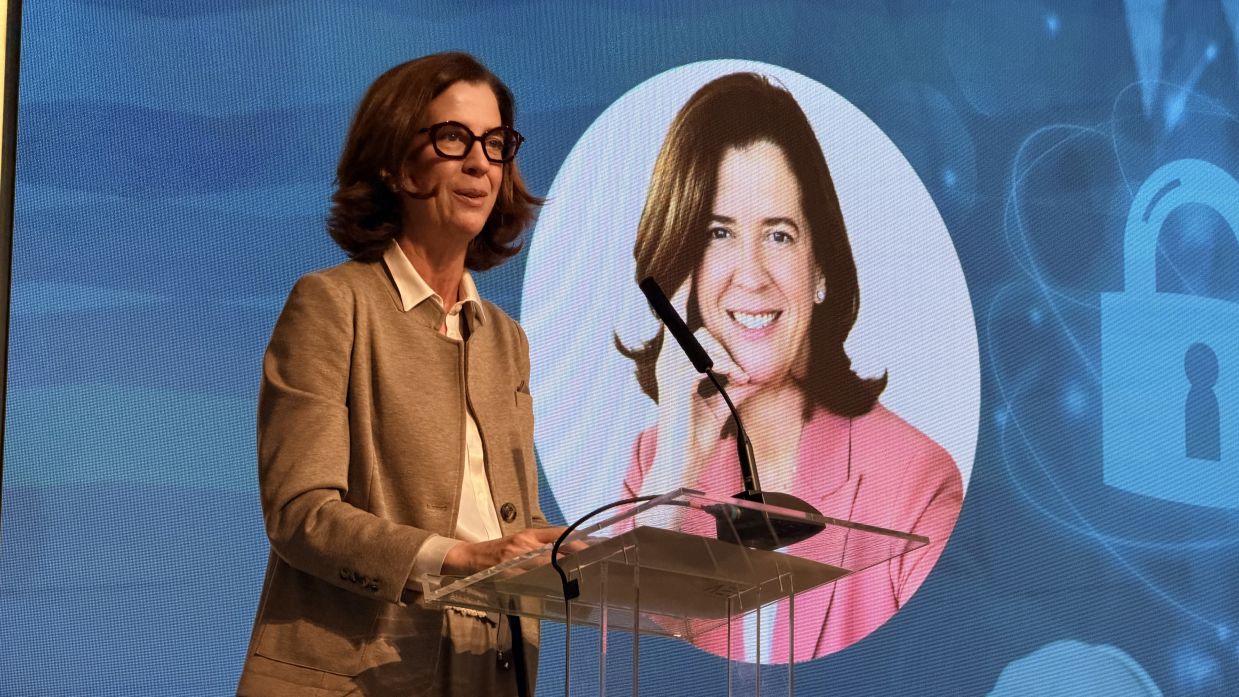
The final panel was moderated by the chairwoman of the AEB, Alejandra Kindelán, who underlined the role of banks as channels for turning savings into investment and how, in that process, “we support families, companies, and countries.” Regarding the challenges presented here today, Kindelán explained that “our sector will continue to deploy its capacity for investment, financing, and growth to drive economic and social development in both the European Union and Latin America.”
The First Vice-President and acting Minister for Economic Affairs and Digital Transformation, Nadia Calviño, closed the day with a defense of public-private collaboration on the path toward the green and digital transition, indicating that the future toward a better society depends on all economic and social actors, including the banking sector. “These meetings are a success and send a message of commitment to dialogue, multilateralism, and European and international institutions, to respond in a coordinated and supportive manner to the challenges we face.”
The event brought together senior representatives from major economic institutions and leading banking entities in Santiago de Compostela, fostering an extensive dialogue and helping to strengthen the banking sector’s commitment to the challenges facing the country, with a broad social perspective, especially regarding the green and digital transition, as well as various open regulatory files.