Home / Latest News / You may be interested in / Articles / Digital Skills for Our Seniors
Digital transformation goes beyond a change in the way we produce and distribute. We may make the mistake of underestimating it if we view it only in terms of other productive revolutions of the past. The digitalization of society is a self-reinforcing process, adapting to the obstacles that arise in its path; it is a true disruption at both the economic and social levels. As a society, we face the greatest innovation process in our recent history, one that shapes our decisions, the way we interact, and even the way we think.
Digitalization must be understood as the penetration of the internet into our lives. Through the internet, one can do practically everything: consult and access private and public services, search for information of interest, and, especially, communicate. All in a simple, fast, and effective manner. It is important that no one is left behind in this unstoppable process and the enormous opportunities it brings. Naturally, it is also relevant that we all identify and address the security challenges posed by relentless digitalization.
A recent study by the European Commission (Digital Economy and Society Index) highlights the need for technological development to be accompanied by improved societal capacity to make the most of it. The rapid pace of digitalization risks leaving many people—especially the elderly, but not only them—unable to keep up with the transformation taking place, particularly in rural areas. International experience shows that with proper training, the rate of digital adoption among seniors can be very high and secure.
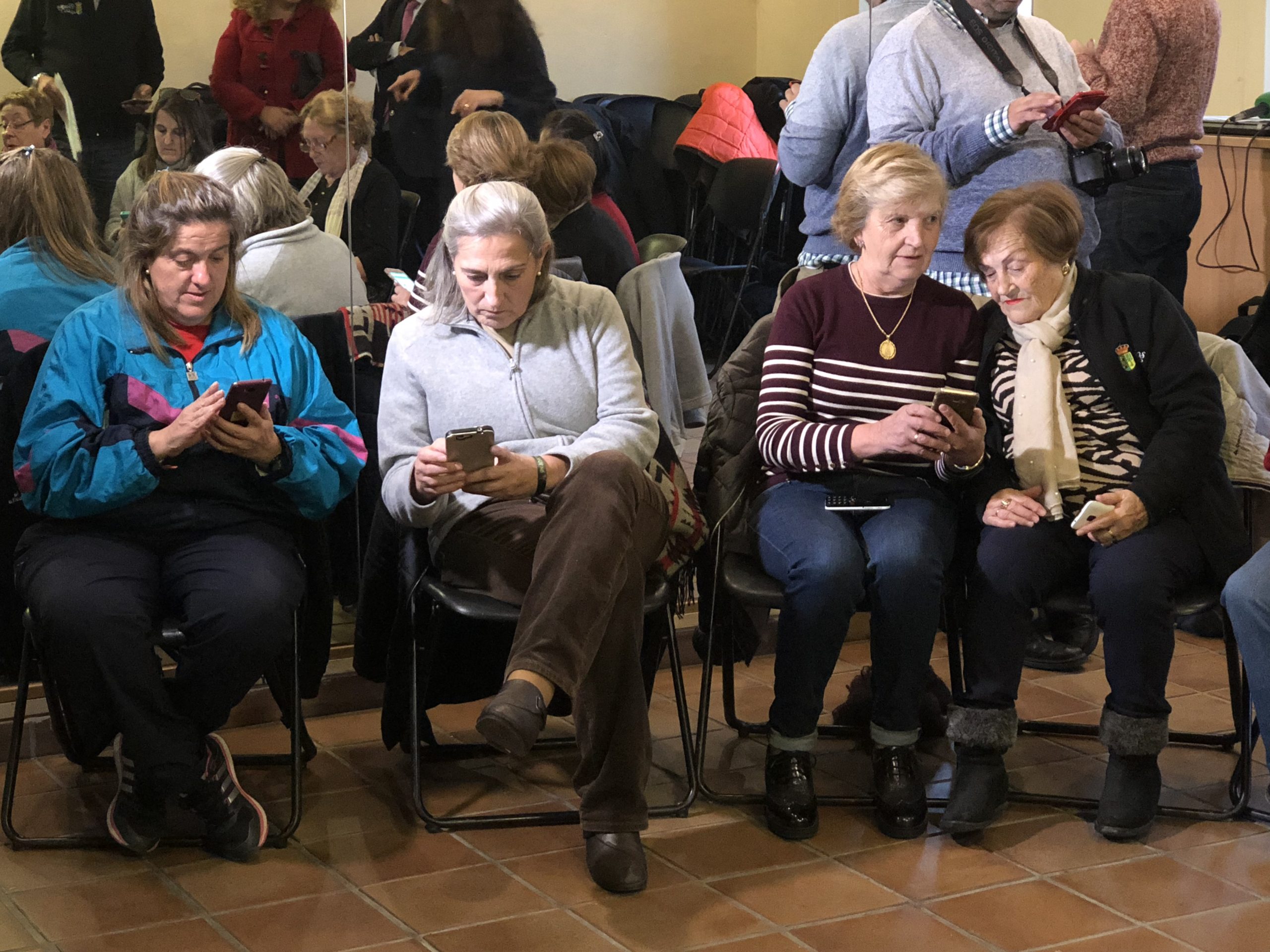
The AEB Foundation and the Cibervoluntarios Foundation have launched Expertclick for the second consecutive year, a training program in the use of new technologies aimed at people over 55 years of age residing in rural areas throughout Spain. This new edition aims to provide digital skills training to nearly 1,000 residents of towns particularly affected by depopulation and aging in the so-called “emptied Spain.” Individuals and institutions interested in these workshops can request training at www.expertclick.org. The intention of both foundations is for the project to become a benchmark in digital training for society, encouraging other sectors, especially the public sector, to join in the challenge of building a digital society.
Each class in the program, focused on the use of mobile phones and tablets, will consist of a theoretical component and a series of practical cases. The ultimate goal is for seniors to improve their proficiency in using digital devices, performing everyday online operations, especially tasks related to healthcare, public administration, and personal finance. After overcoming their initial distrust, and with clear security guidelines, our seniors can learn what technology offers to improve their quality of life. Broad and transparent access to financial services is a good example.
Digitalization is an opportunity to make our lives easier, especially for our seniors. Electronic healthcare management is commonplace and essential, particularly in depopulated rural areas increasingly affected by deficiencies in the provision of social services. Having the best internet access throughout Spain, especially in small municipalities, is key to this digital empowerment process. It is also a revitalizing element for these areas affected by depopulation and aging, with infrastructure below desirable levels. Connectivity may be the key to reversing this trend. That is why it is essential for authorities to redouble their efforts to facilitate internet access across all of Spain, especially in small municipalities where the population is steadily declining.
José Luis Martínez Campuzano, spokesperson for the Spanish Banking Association