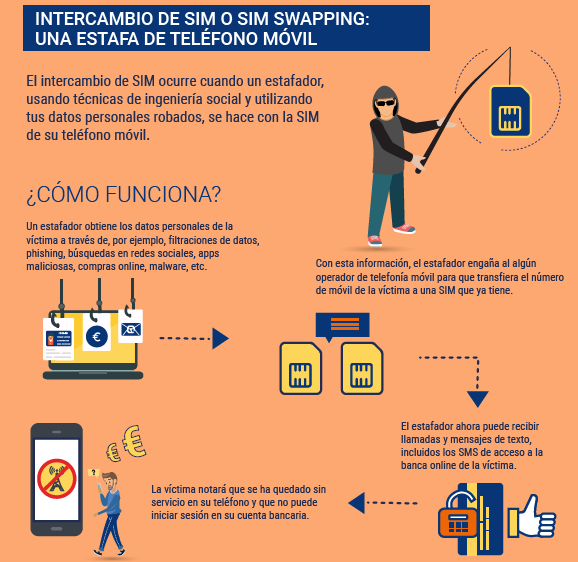
SIM swapping occurs when a scammer, using social engineering techniques and your stolen personal data, takes control of your mobile phone’s SIM card.
How does it work?
- A scammer obtains the victim’s personal data through, for example, data breaches, phishing, social media searches, malicious apps, online purchases, malware, etc.
- With this information, the scammer tricks a mobile network operator into transferring the victim’s mobile number to a SIM card the scammer already has.
- The scammer can now receive calls and text messages, including the SMS codes used to access the victim’s online banking.
- The victim will notice that their phone has lost service and that they cannot log in to their bank account.
What Can You Do?
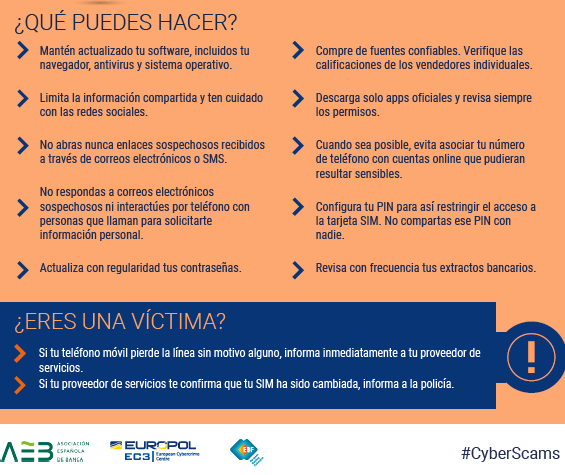
- Keep your software up to date, including your browser, antivirus and operating system.
- Limit the information you share and be cautious on social media.
- Never open suspicious links received via email or SMS.
- Do not reply to suspicious emails or engage by phone with people who call to request your personal information.
- Update your passwords regularly.
- Download only official apps and always review permissions.
- Where possible, avoid linking your phone number to online accounts that could be sensitive.
- Set up your PIN to restrict access to the SIM card. Do not share that PIN with anyone.
- Check your bank statements frequently.
Are you a victim?
- If your mobile phone loses service for no apparent reason, inform your service provider immediately.
- If your service provider confirms that your SIM has been changed, report it to the police.
You can access the video via this link
Download the infographic here